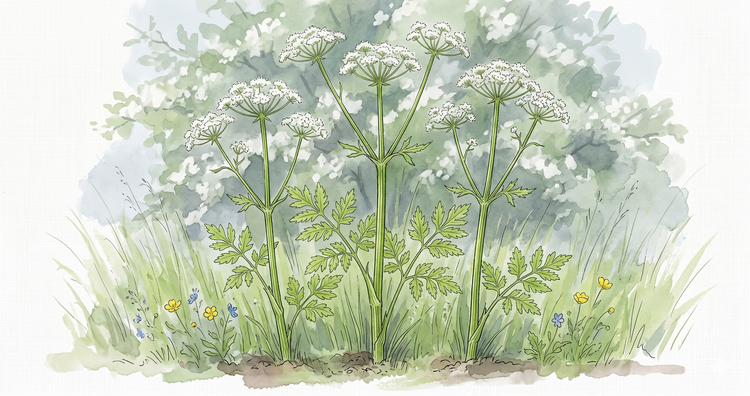
Cow parsley and hemlock – telling them apart on a May verge
Two waist-high white umbellifers flower on the same May verge. One is harmless cow parsley; the other is hemlock, which will kill you in a small enough dose.
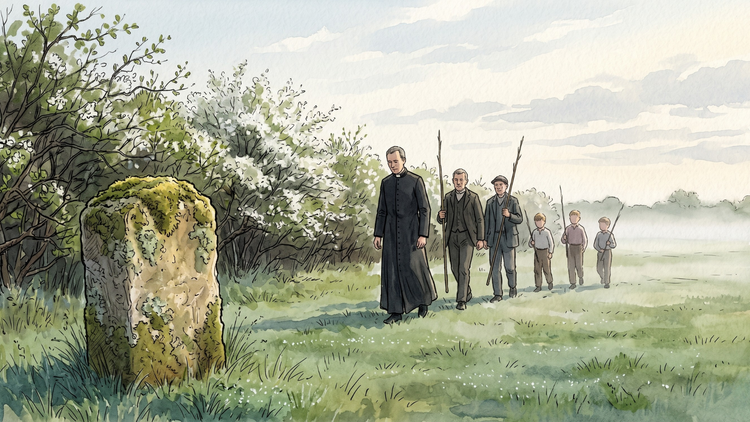
Beating of the Bounds – walking the English parish boundary
Before printed maps, the parish boundary lived in collective memory. On Rogation Days the procession walked it, and at the boundary stones a boy was bumped against the stone rather than the wand.
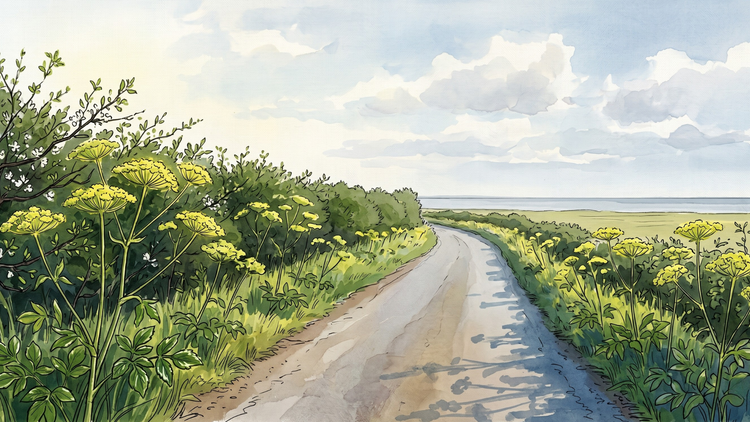
Alexanders – the Lenten pot-herb of the coastal lane
Smyrnium olusatrum, once in every Lenten kitchen and now barely known – the umbellifer that tastes of celery, parsley, and asparagus.
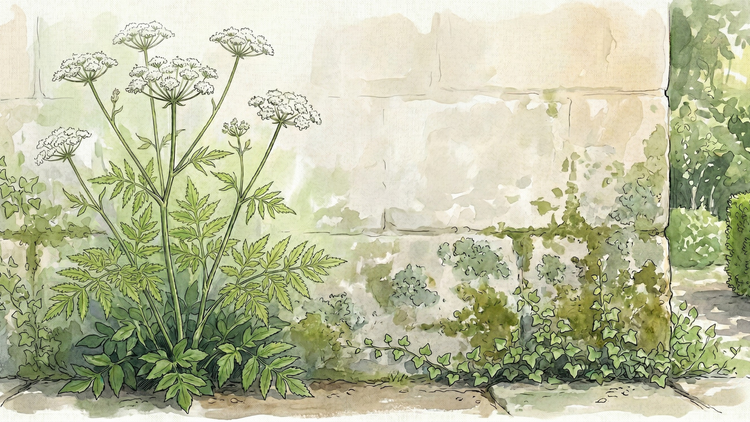
Sweet cicely – the cottage garden’s sugar saver
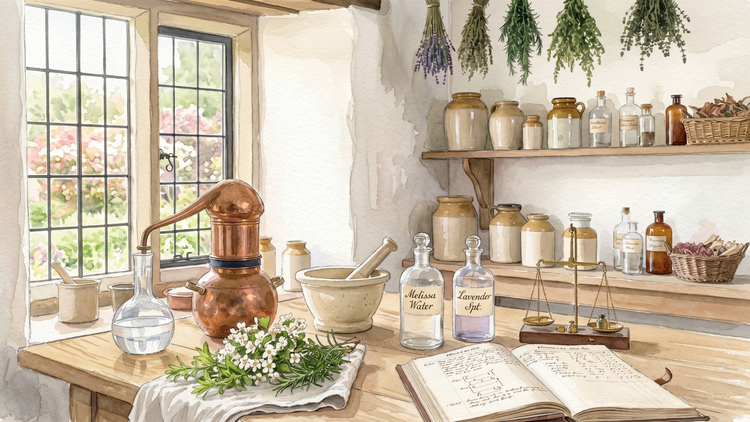
Myrrhis odorata, fern-leaved and aniseed-scented – the cottage garden's sugar saver before sugar was cheap, and still useful in the still-room.
Beltane – the cross-quarter day that opens summer
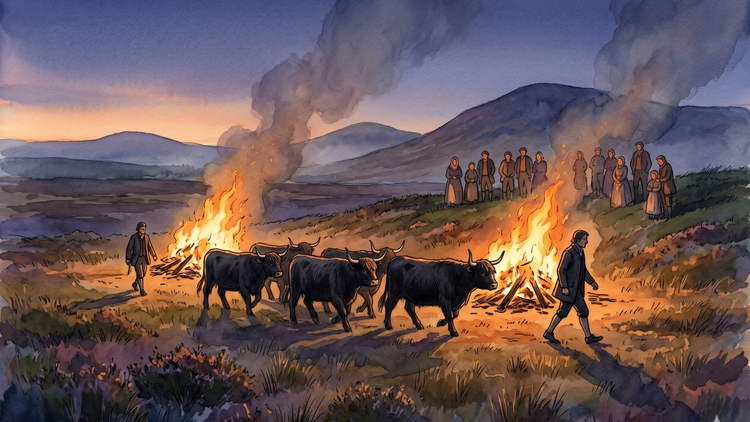
On May eve in the Highlands, into the 1840s, cattle were driven between two fires onto summer ground. Beltane is the cross-quarter day that opens the warm half of the year.
The Waxing Moon
This week: a man on a horse buried in flowers, riding blind through a Derbyshire village; the small flowers on ground nobody got round to improving; a green gooseberry fool; and the Saxon corner stones of a thousand-year-old church. The hedges are loud with hawthorn.
The Hawthorn Veil
This week: the well-dressing at Tissington, the hedge as a parliamentary decision, sweet woodruff and Maibowle, and a meadow at ground level. It is the strangest week of the year for the hedges, and the trees on the Wallington Road are solid white from a hundred yards off.
The Returning Swift
This week: a dance that runs through the kitchens of Helston, what those screaming parties tell you about the weather, wood sorrel in a Restoration salad, and a Norman arch as a thousand-year clue. The swifts came back on Monday, and the summer arrived with them.
The May Eve
This week: Padstow drumming and the snap of a wooden jaw on May Day morning, the household sprint before Beltane, sweet cicely as the kitchen's first sweetener, and a field path walked into the dusk. The light is holding longer as May approaches.
The English still-room
The still-room was the working pharmacy of the English country house from the medieval period to the early twentieth century. What it produced.