The Still-Room

The Still-Room

The room where the still once stood, and the work that happened in it: plants gathered from the verge and the hedge, then turned to cordials, butters, wines and remedies. Wild garlic into oxymel, hawthorn flowers into butter, cowslips into a wine that emptied the meadows. The herbs come with the uses they were put to, before the chemist took them over.
28
Apr
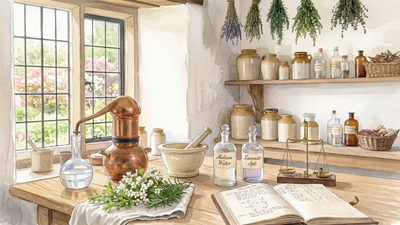
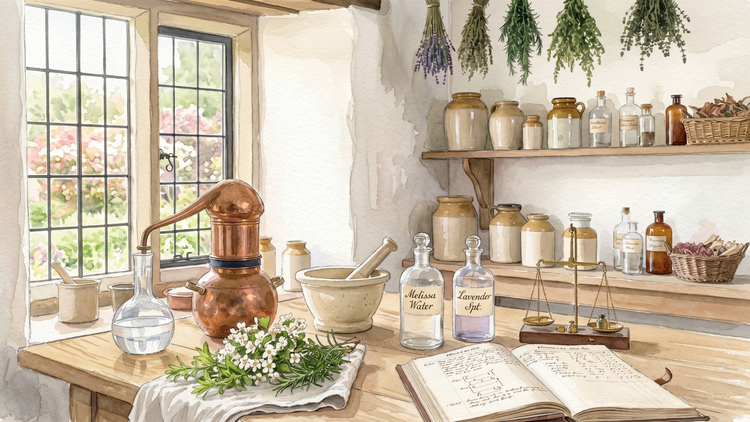
English still-room: copper alembic still, mortar and pestle, bottles for Melissa Water and Lavender Spirit, brass scales, open handwritten receipt book, dried herbs above stoneware.

The English still-room

The still-room was the working pharmacy of the English country house from the medieval period to the early twentieth century. What it produced.
3 min read
28
Apr
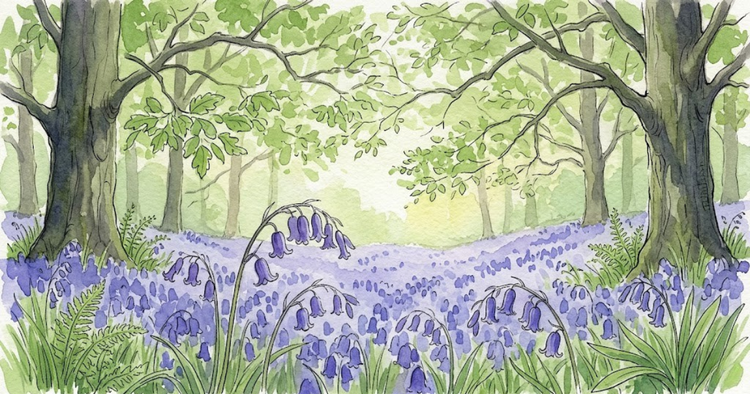
A dense carpet of native English bluebells flooding the floor of a beech wood in late April, the trunks rising vertically through the blue, fresh green leaves overhead.

Bluebells: how to tell a native wood

A dense carpet of bluebells in late April almost always means woodland continuously wooded since before 1600. How to read the flower and the wood.
3 min read
14
Apr
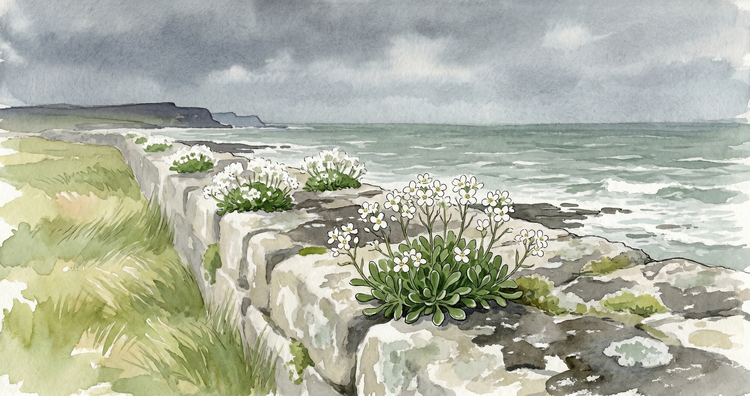
Small white-flowered plants growing in crevices of a salt-weathered coastal wall, sea visible in the background.

Scurvy Grass

A pungent coastal plant eaten raw by sailors from the sixteenth century onward to prevent scurvy. Where to find it and why it worked.
2 min read
14
Apr
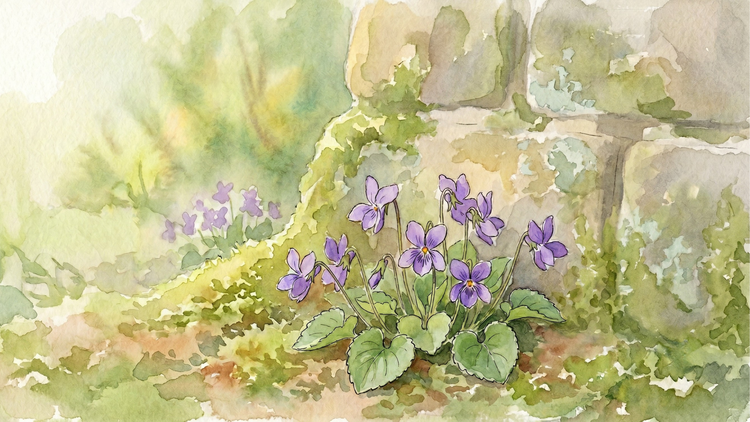
Sweet violets low to the ground at the base of an old wall, deep purple petals, soft natural light.

Sweet Violet and Ionone

The sweet violet contains a compound that briefly disables your sense of smell. You smell it, it vanishes, then it returns. Not your imagination.
2 min read
14
Apr
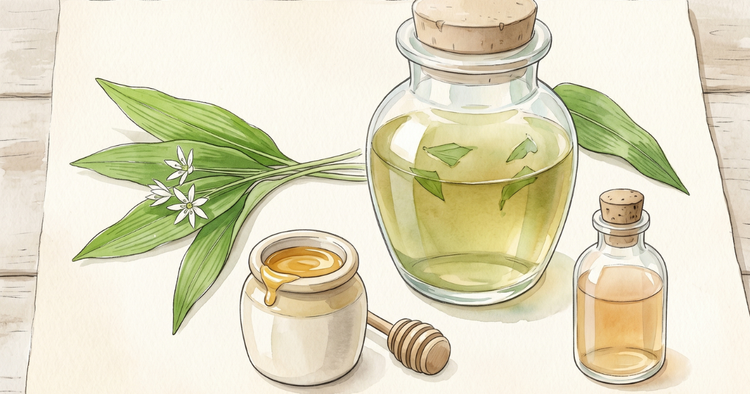
A cork-stoppered glass jar of amber oxymel with wild garlic leaves visible inside, on a dark wooden surface, fresh wild garlic leaves beside it.

Wild Garlic Oxymel Recipe

A hedgerow remedy older than English medicine. Wild garlic steeped in honey and vinegar for four weeks. After Culpeper, 1653.
2 min read