Wild Garlic Oxymel Recipe
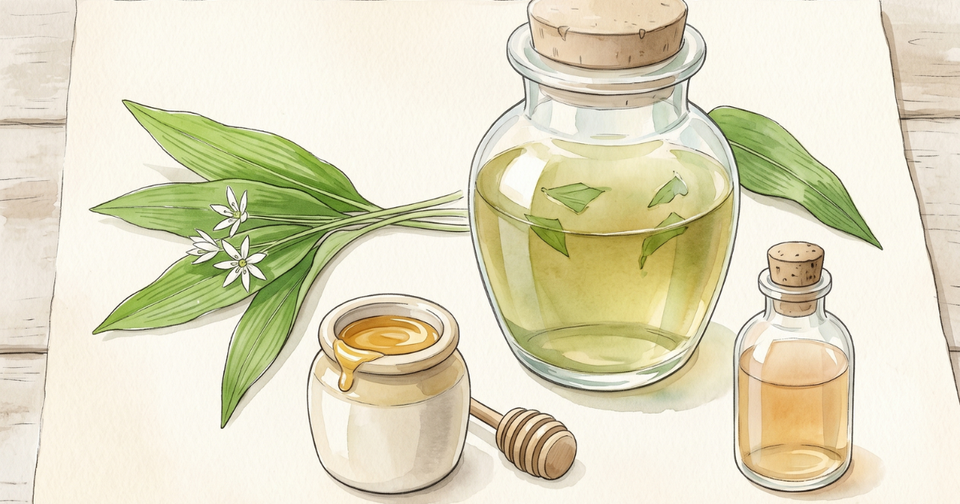
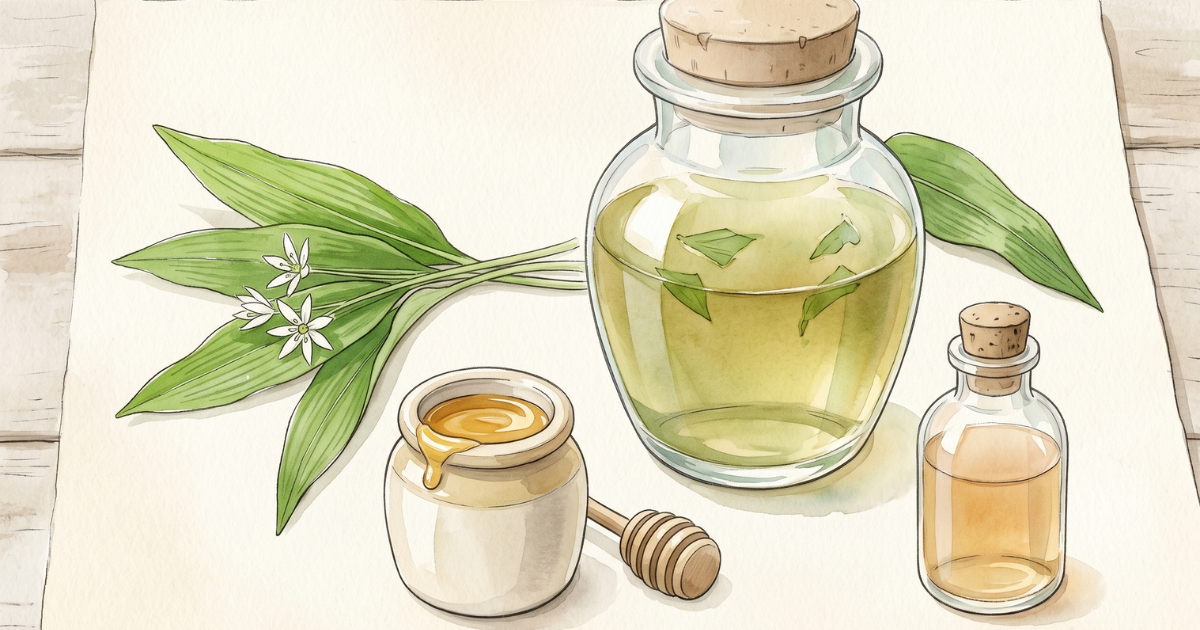
The word oxymel comes from the Greek: oxys, acid, and meli, honey. The preparation is older than English medicine by a considerable distance. Hippocrates recommended it. Culpeper used it. The still-room inherited it without much ceremony and applied it to whatever the hedgerow offered.
The principle is straightforward: honey and vinegar together will draw out and preserve the medicinal properties of almost any plant you care to put in them, and they make bitter or pungent things considerably more drinkable in the process. The tradition of using vinegars and honey as preservative and delivery systems for plant remedies is far older than anyone can trace. Every culture with access to bees and fermentation discovered essentially the same thing — that the combination works. Whether the recipe was transmitted across continents or reinvented independently is impossible to trace.
Wild garlic is exactly the kind of plant an oxymel was designed for. The leaves are available in quantity from late March through May, the flavour is sharp enough to need something to soften it, and garlic's reputation as a remedy for colds and coughs has not changed in four centuries.
Pick a large handful of wild garlic leaves before the flowers open, on a dry morning. Wash and dry them thoroughly and pack them into a clean jar. Mix together two parts raw apple cider vinegar and one part good honey, stirring until the honey has fully dissolved. Pour the mixture over the leaves until they are completely covered. Seal the jar and leave in a cool dark place for three to four weeks, shaking it gently every few days. Strain through a cloth into a clean bottle and seal.
A tablespoonful in warm water at the first sign of a cold, or as a sharp, faintly garlicky dressing on anything that needs vinegar. It keeps for six months at least. This takes four weeks to be ready, which means making it now and opening it in May. That is the still-room's logic.
After Nicholas Culpeper, The English Physitian, 1653, and older domestic practice.
The Cottage Almanac covers seasonal plants, still-room recipes, and the natural history of the British countryside every Thursday. Subscribe free to get the Thursday letter.