What Is a Blackthorn Winter?
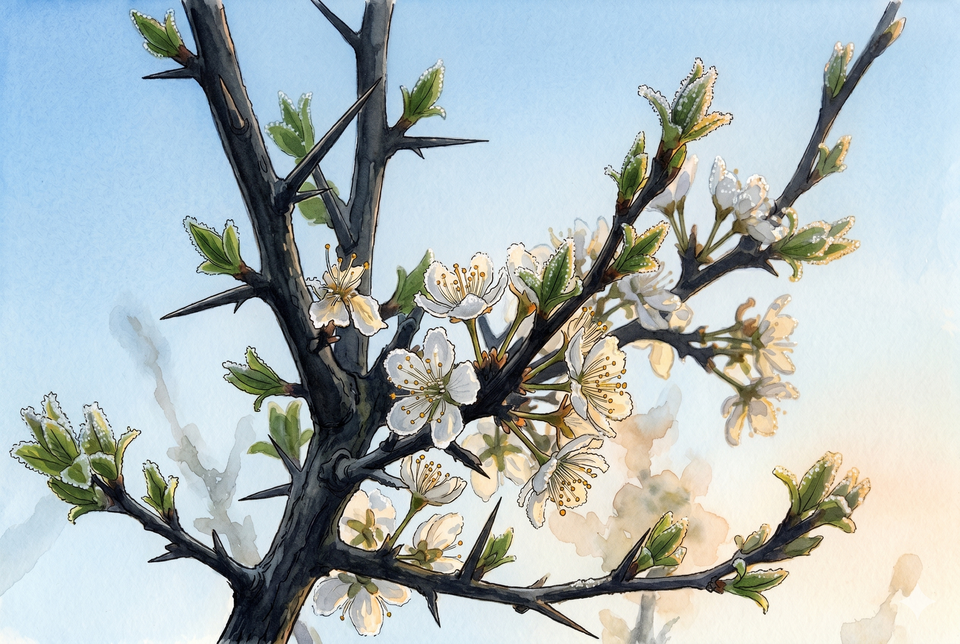
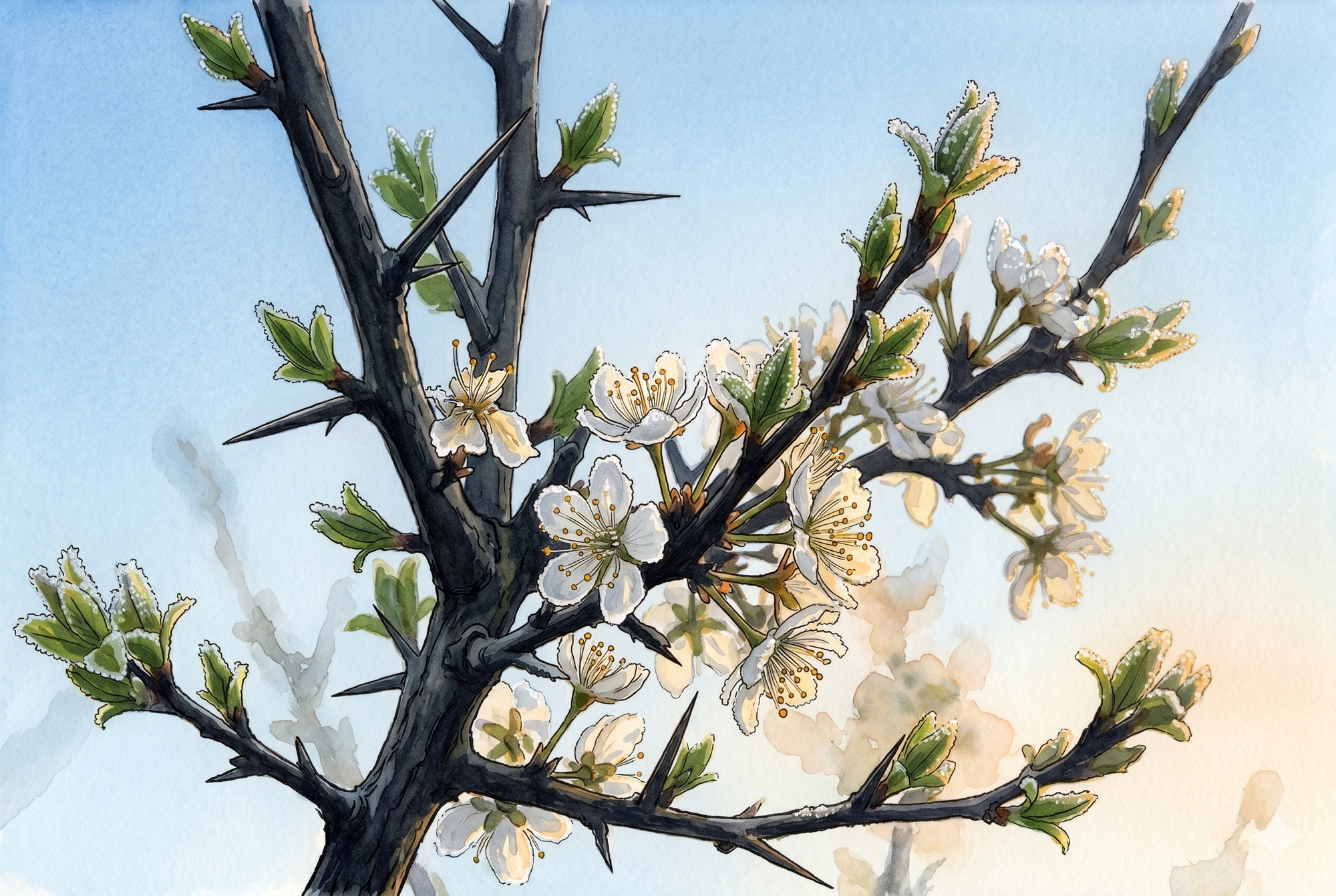
The blackthorn winter is the cold snap that arrives in late March or early April, just as the blackthorn comes into flower. White blossom on bare dark wood, in the cold, before a single leaf has opened. The timing is consistent enough to have earned its own name.
The Met Office recognises the pattern. A period of settled, mild weather in mid-March is followed by an abrupt return to cold — often with frost, sometimes with snow — coinciding almost exactly with the blackthorn flowering. The mechanism is meteorological rather than botanical: a shift in the jet stream pulls cold continental air across England at the same point each spring. The blackthorn happens to flower at the same time, which is phenology rather than cause and effect, but the coincidence has been noted for centuries.
The folklore runs deeper than the weather. In a normal English spring, blackthorn flowers in the same weeks as Holy Week — Palm Sunday, Good Friday, Easter. To people for whom both calendars were equally real, the coincidence meant something. White blossom on bare, leafless, thorn-armoured wood. Flowering before there is any visible life to sustain it. To eyes trained on the Easter story, this was resurrection made botanical, happening quietly in the hedge while everyone was looking at the church.
The wood told a different story entirely. Blackthorn was named as one of the possible sources of the Crown of Thorns. The same wood was said to be favoured by witches for their staves, cut on dark nights for potency. And the blossom brought indoors was not merely unlucky but specifically, firmly, repeatedly forbidden — the kind of prohibition passed down not because anyone questioned it but because nobody wanted to find out what happens if they don't.
What is curious is why the prohibition persists with such conviction across England, when its origin is entirely lost. People obeyed it because their mothers obeyed it, and that was reason enough. The certainty predates the explanations. The fear comes before the story.
The Cottage Almanac covers the folklore, natural history, and documented strangeness of the British countryside every Thursday. Subscribe free to get the Thursday letter.