Sugar Snap Peas: When to Pick and the Victorian Butter Pea
The point of a sugar snap pea is the pod, which makes the picking rule the opposite of the one for shelling peas. You want them while the pods are still flat-sided and the peas inside are no bigger than a match head, crisp and sweet and eaten whole. Wait for the pods to swell and fill, the way you would with a shelling pea, and you have missed the moment: the pod toughens and the whole purpose of the thing is gone. Picked at the right point, a sugar snap is eaten raw in the garden as readily as cooked, pod, peas and all, with nothing thrown away.
Picking at the right point
Timing is everything with a snap. The advice from the RHS is to pick mangetout and sugar snap pods when they are about 7.5 centimetres long, just as the peas inside begin to show, and to keep picking regularly, since a plant left with mature pods on it stops producing. Hold the stem with one hand as you pull each pod with the other, so you do not tear the plant. A good snap pod bends and then breaks with an audible click; if it folds without snapping it has gone over. Through summer, going down the row every couple of days keeps the plant cropping and keeps every pod at its short, sweet best.
The Victorian butter pea
The sugar snap has a longer history than its modern reputation suggests. Jane Grigson, in her Vegetable Book of 1978, noted that while the sugar snap as we buy it is a twentieth-century hybrid, a pea grown for the same purpose, the butter pea, was kept in English gardens through the 1800s. It was harvested before the seeds matured and boiled whole in the pod, then served simply with a large knob of summer butter and fresh mint. The idea of eating the pod, in other words, is not a supermarket novelty. The breeders gave it back in a sweeter, stringless form, but the English kitchen garden had been doing it for well over a century.
A quick pan with pancetta and mint
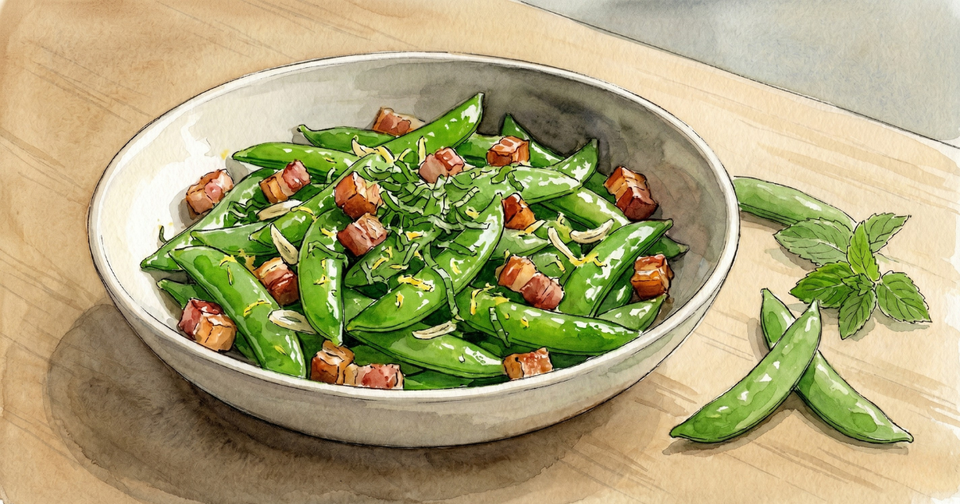
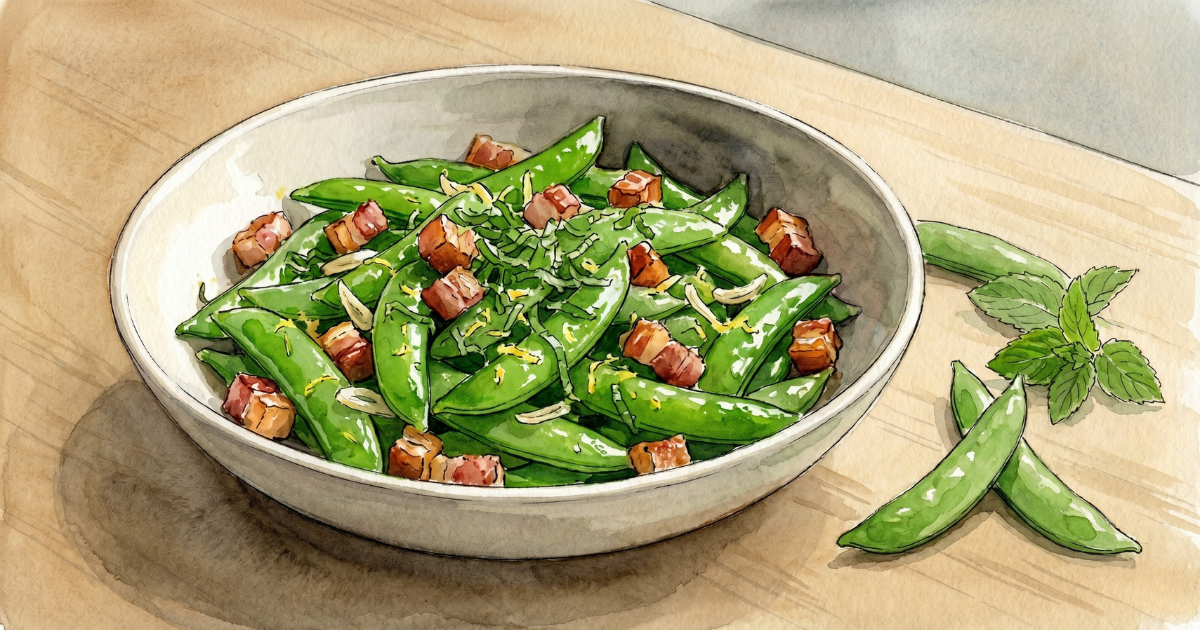
For a fast summer side, sugar snaps want very little. If you want to cook them, render a handful of cubed pancetta in a hot pan until the edges crisp, add a sliced clove of garlic for half a minute, then throw in the topped-and-tailed pods and toss over high heat for no more than two minutes. They should turn a glossy bright green and keep their snap; a minute too long and they slump. Off the heat, fold through shredded mint and the grated zest of half a lemon, a little salt, a good grind of pepper. Goat's cheese or feta crumbled over turns the side into a light lunch.
Freezing them for winter
They freeze better than you would expect, if you are quick about it. Top and tail the pods, blanch them in boiling water for a single minute, then plunge them straight into cold water to stop the cooking. Drain and dry them well, spread them on a tray so they do not clump, and freeze them flat before tipping them into a bag. Done this way they keep their snap through the winter, which a bag of shop-bought frozen peas has never once managed. The trick is the speed: the less time between the row and the freezer, the more of the summer you keep.
Mangetout, sugar snap, shelling pea
It helps to know which pea you have. A shelling pea, the traditional garden pea, is grown for the seeds and the pod is discarded. A mangetout has a flat, stringless pod, picked very young and eaten whole. A sugar snap sits between them: a rounded, fleshy pod with small peas inside, eaten whole like a mangetout but with the sweetness and crunch of a pod allowed to fill out just a little. All three are the same species, Pisum sativum, separated only by what the breeder selected for and the moment you choose to pick. With a snap, that moment is early.
Sources: Jane Grigson, Vegetable Book (1978); How to grow peas, RHS.