Royston Cave
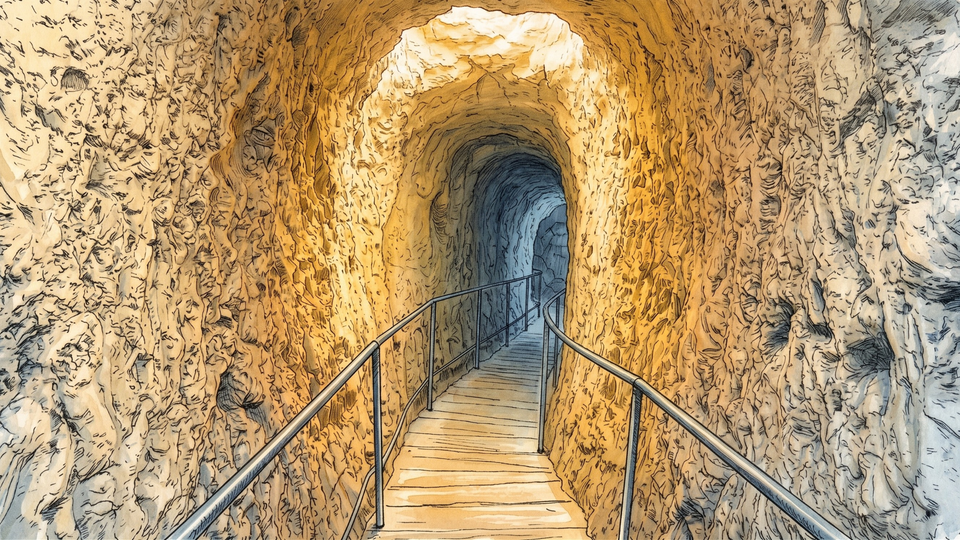
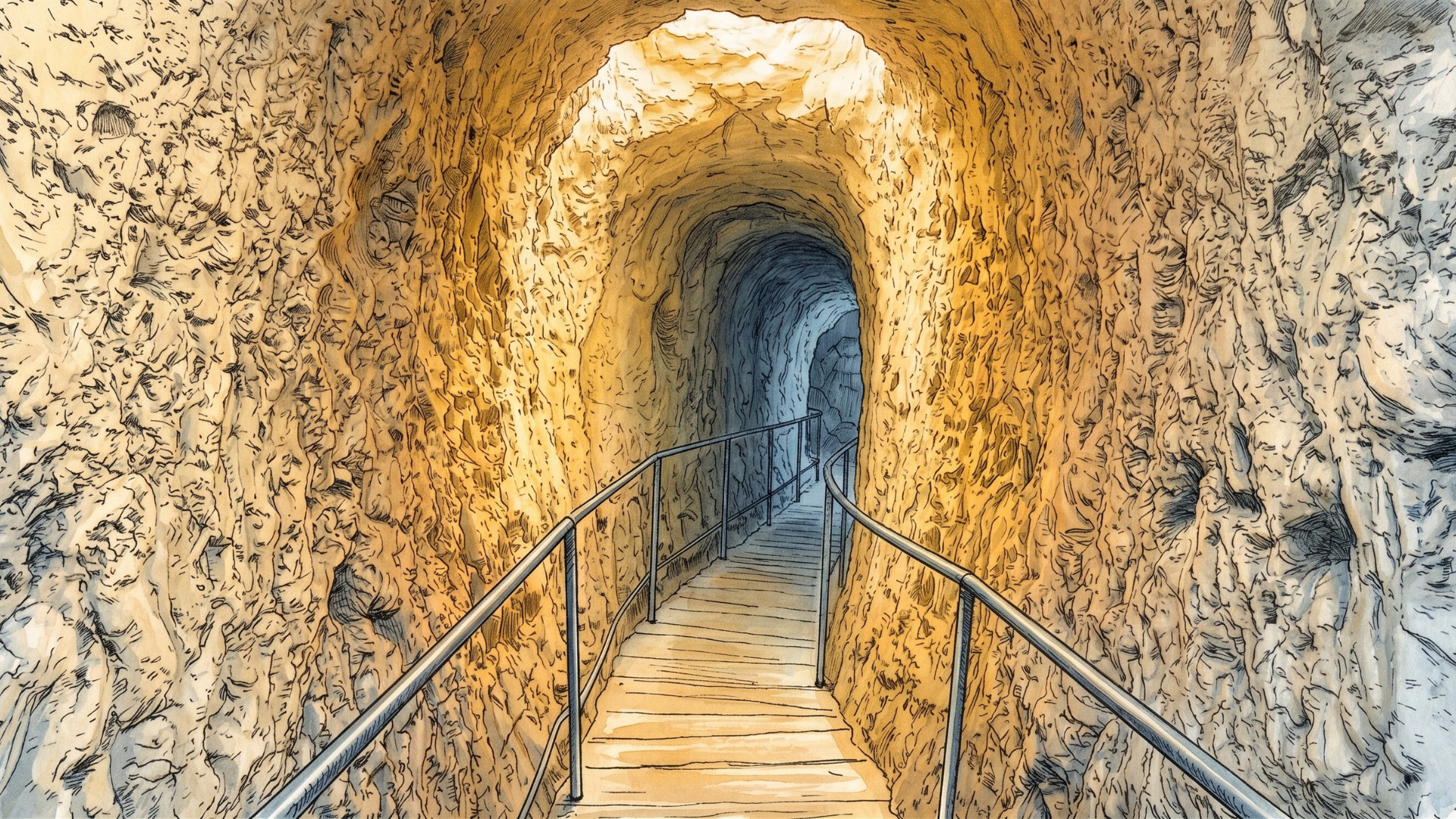
In 1742, a workman digging beneath Royston market place broke through into a chamber that should not have been there. The walls were covered in medieval carvings — saints, a crucifixion, figures nobody could identify. It had been sealed for centuries. Its origins remain unexplained.
Royston Cave is a bell-shaped chamber cut into the chalk, roughly eight feet wide and seventeen feet deep, reached by a narrow shaft from the street above. The carvings cover almost every surface: a figure that may be the Holy Family, another that may be St Christopher, a crucifixion, and several figures whose identities have been debated since the day they were uncovered. Some are clearly Christian. Others resist interpretation entirely.
The chamber sits directly beneath the crossroads of the Icknield Way and Ermine Street — two of the oldest roads in England, one prehistoric and one Roman. Whether this location is significant to the cave's purpose, whether it was a hermitage, a place of worship, a hiding place, or something else entirely, has never been established.
Theories have accumulated steadily since 1742. The Knights Templar are frequently invoked, since a Templar preceptory existed nearby, though no documentary evidence links the two. The Augustinian priory at Royston is another candidate. Some scholars have suggested the carvings date from multiple periods, implying the cave was used and reused over centuries by different groups for different purposes.
What is not in dispute is that someone carved these figures, sealed the chamber, and left no record of having done so. The cave was forgotten completely until a workman's tool went through the roof.
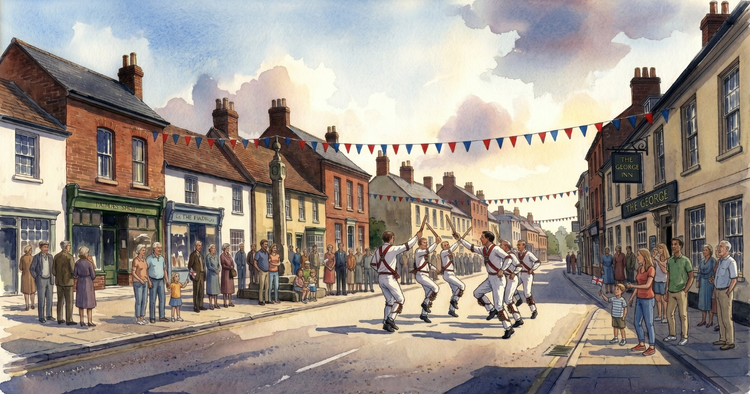
Royston Cave is open to visitors between April and September. It is fourteen feet below the market place of a small Hertfordshire town, and it is one of the strangest places in England.
The Cottage Almanac is written from Baldock, three miles from Royston, and covers the folklore, natural history, and documented strangeness of the British countryside every Thursday. Subscribe free to get the Thursday letter.