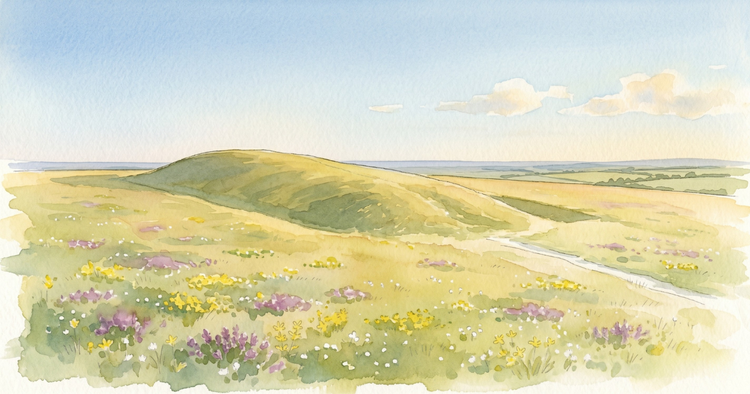
Long Barrows: How to Find One and Read It
A long barrow is a Neolithic mound longer than it is wide, raised about five and a half thousand years ago. How to find your nearest, by its shape, by an OS map, and by the scent of the oldest turf.
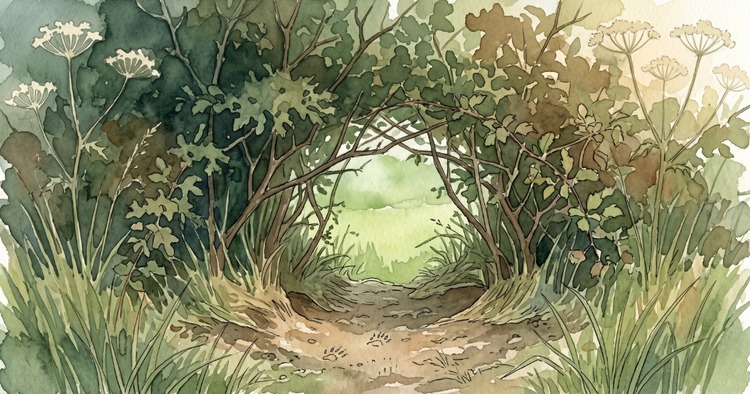
Culverkeys: The Sussex Word for an Animal-Made Gap in a Hedge
A culverkey is the worn gap at the base of a hedge made by regular animal use. Sussex dialect, recorded by Robert Macfarlane in Landmarks.
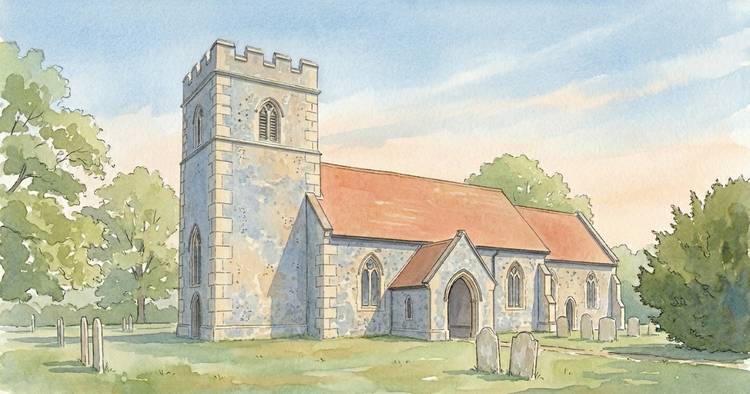
Saxon Long-and-Short Work: Dating an English Church Before 1066
Tall vertical stones alternating with broad horizontals at the corners of a tower mark Saxon work, pre-1066. Earls Barton is the classic example.
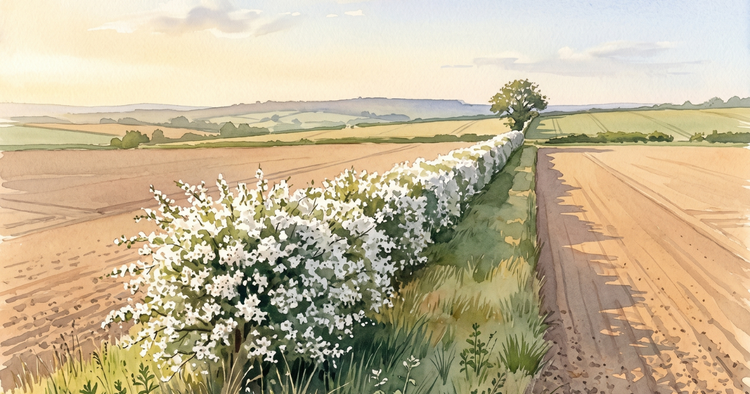
The Enclosure Hedge: Reading the Hawthorn Lines Across England
Most English hedges were planted in parliament: hawthorn whips run straight across the parish by Enclosure Commissioners between 1773 and 1882.
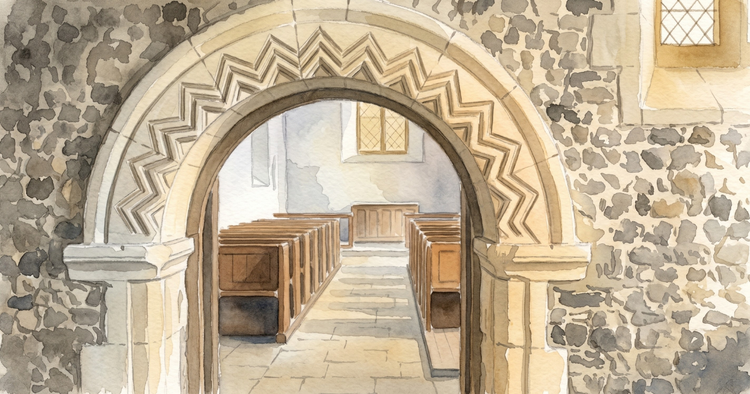
The Norman Round Arch: A Thousand-Year Marker in Your Village Church
The round arch comes centuries before the pointed one. A Norman or Saxon arch tells you the building has thousand-year foundations.
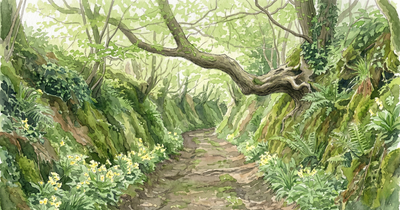
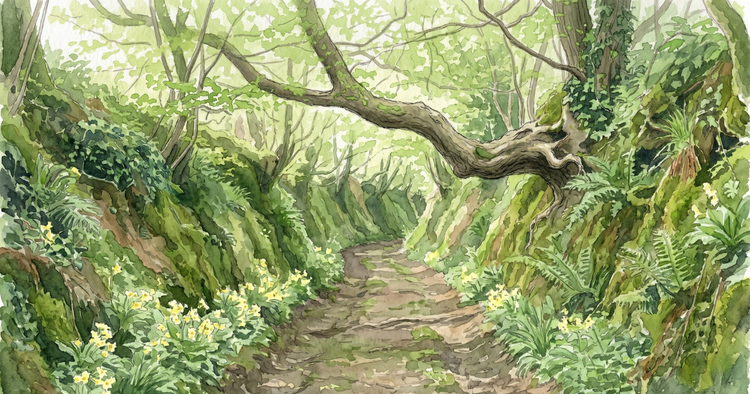
Holloways: how to read a sunken lane
A sunken lane below field level records every foot, hoof, and cartwheel that has gone along it. The depth tells you roughly how old the lane is.
Royston Cave
A chalk chamber covered in medieval carvings, discovered by accident in 1742 beneath Royston market place. Its origins remain unexplained.
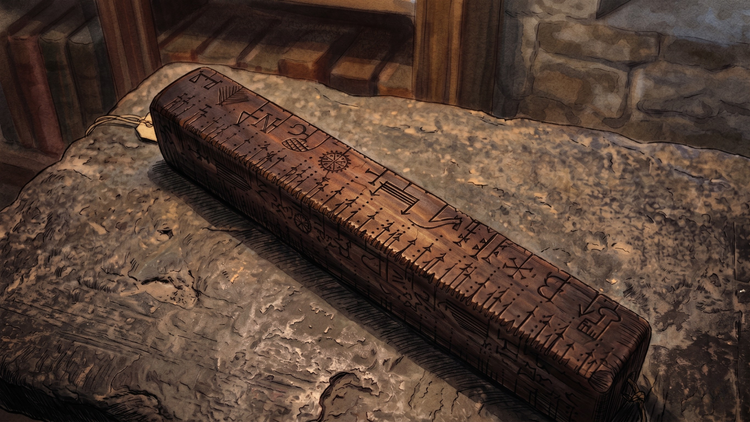
What Is a Clog Almanac?
A carved wooden staff used as a perpetual calendar across northern England. How the symbols worked, and why it never needed updating.