Scurvy Grass
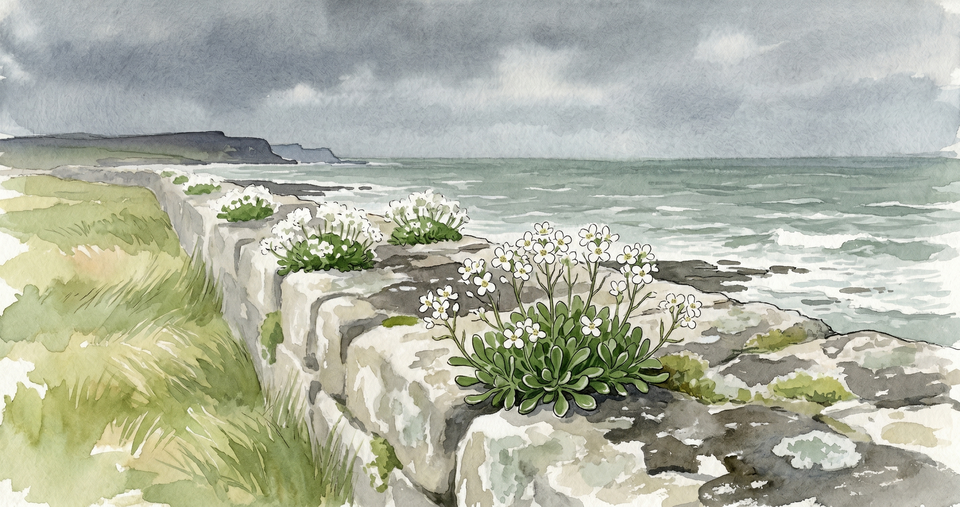
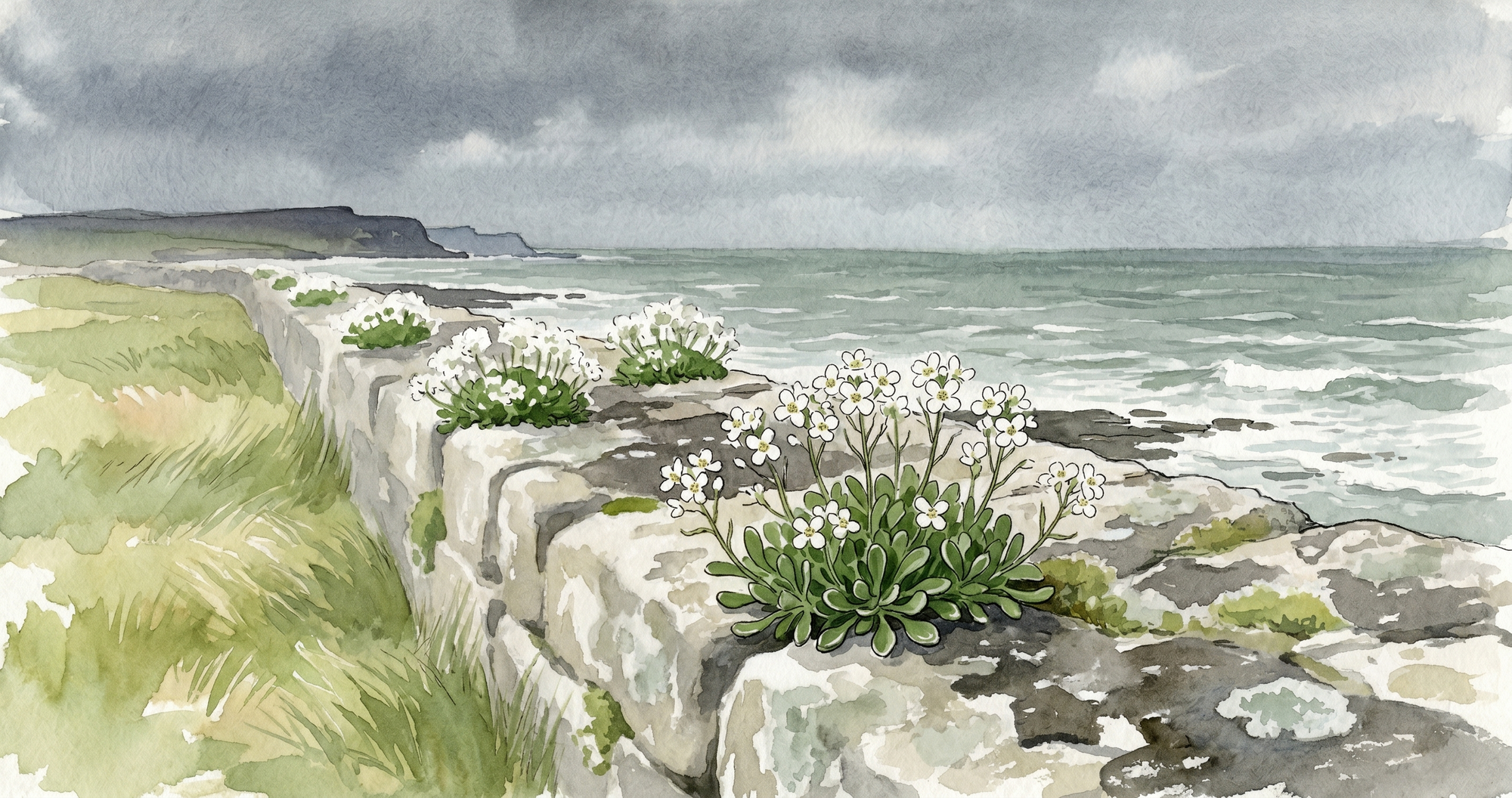
Scurvy grass is not a grass. It is a small, fleshy-leaved plant of the cabbage family — Cochlearia officinalis — found on coastal walls, saltmarshes, cliff edges, and increasingly along the salted verges of major roads. The leaves are rounded, slightly succulent, and intensely pungent. The flavour is hot, bitter, and sulphurous. Nobody eats it for pleasure.
They ate it to survive. From the sixteenth century onward, English sailors carried scurvy grass aboard ship or gathered it at coastal stops specifically to prevent scurvy — the disease caused by vitamin C deficiency that loosened teeth, reopened old wounds, and killed more men at sea than enemy action. The plant is extraordinarily rich in vitamin C. A handful of raw leaves, chewed daily, was enough to hold off the symptoms.
John Gerard described it in The Herball of 1597, noting its use among seafarers and its preference for salt-laden ground. Coastal folk had their own name for it in many regions — "spoonwort" for the shape of its basal leaves, or simply "scurvy grass" because everyone knew what it was for.
The plant's effectiveness was understood empirically long before the chemistry of ascorbic acid was identified. Sailors knew it worked. Ship's surgeons carried it. Captains ordered men to gather it at every landfall where it grew. The logic was simple and correct, even if the mechanism would not be explained for another three hundred years.
Scurvy grass has undergone an unexpected expansion in the last thirty years. The heavy salting of motorways and A-roads in winter has created a new coastal habitat running through the middle of England. The plant has colonised road verges, central reservations, and slip roads in quantities that would have astonished Gerard. It flowers white in spring, low to the ground, and most drivers pass it at seventy miles an hour without knowing what it is or what it did.
The Cottage Almanac covers seasonal plants, still-room history, and the natural history of the British countryside every Thursday. Subscribe free to get the Thursday letter.