The Grovely Forest Rights of Wishford Magna: Oak Apple Day on the Cathedral Green
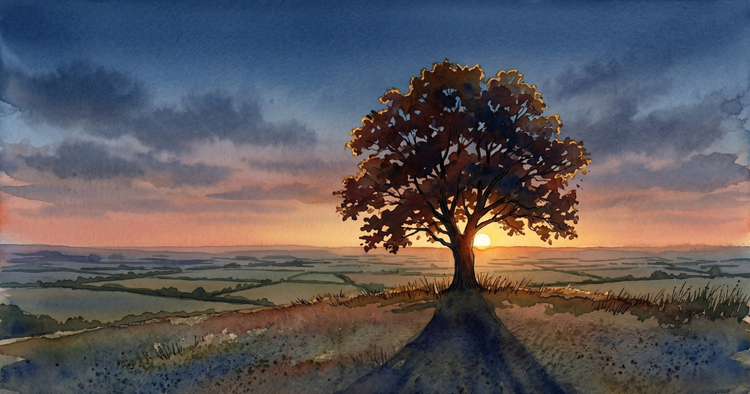
On 29 May, in a Wiltshire village five miles north of Salisbury, the residents of Great Wishford wake themselves before dawn and walk up to Grovely Wood to cut green oak boughs. The right they are claiming was confirmed in a forest court at Grovely in March 1603. The inhabitants of the village had been defending it in court since 1292, and the charter itself records only that it confirms rights existing "from time out of mynde." The day is Oak Apple Day, fixed to 29 May since the restoration of Charles II in 1660. The custom is older than the day it is held on.
The pre-dawn waking
The village is woken before dawn, historically by trumpets and pots and pans clanging until every house showed a light, now at around 5.30 in the morning by anyone willing to make the noise. The waking moves through the village in a loose procession and lasts about half an hour. By six o'clock everyone is up and the day's procession is preparing.
The walk to Grovely Wood
The villagers walk up to the wood, which sits on a chalk ridge above the village, and cut green oak boughs no thicker than a forearm. The boughs are carried back to the village in procession. The right being exercised is the bough-cutting right specifically, not a general firewood right – green oak in late May is the marker of this particular charter.
The Marriage Bough
One large bough is hoisted to the top of St Giles's church tower as the Marriage Bough. It is held to bring luck to any wedding in the church in the coming year. The bough is replaced annually on Oak Apple Day and stays up until the following May, when the new one goes up.
The procession to Salisbury Cathedral
A delegation processes the six miles into Salisbury, traditionally on foot, now mostly by car. The walk crosses fields the village has walked across to Salisbury market for centuries. The cathedral service is at midday on Oak Apple Day and the village arrives in time to gather on the cathedral green beforehand.
The Nitch Ladies
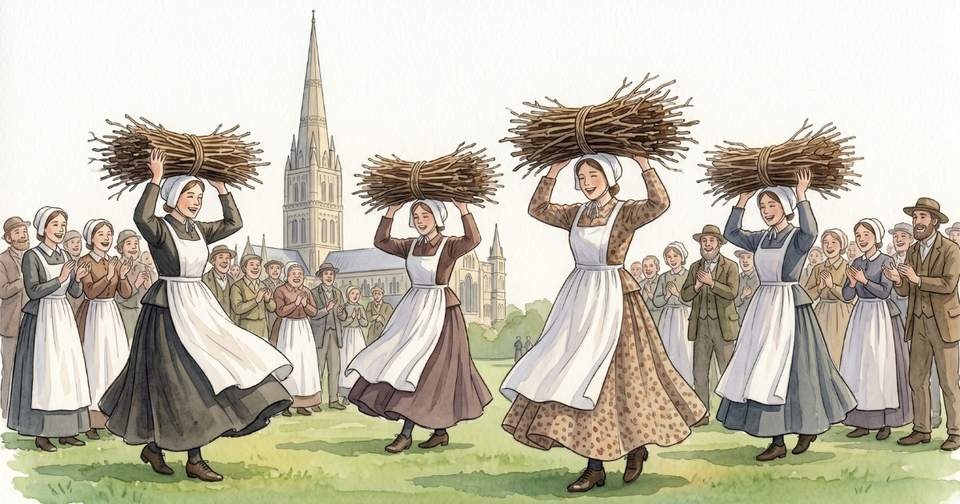
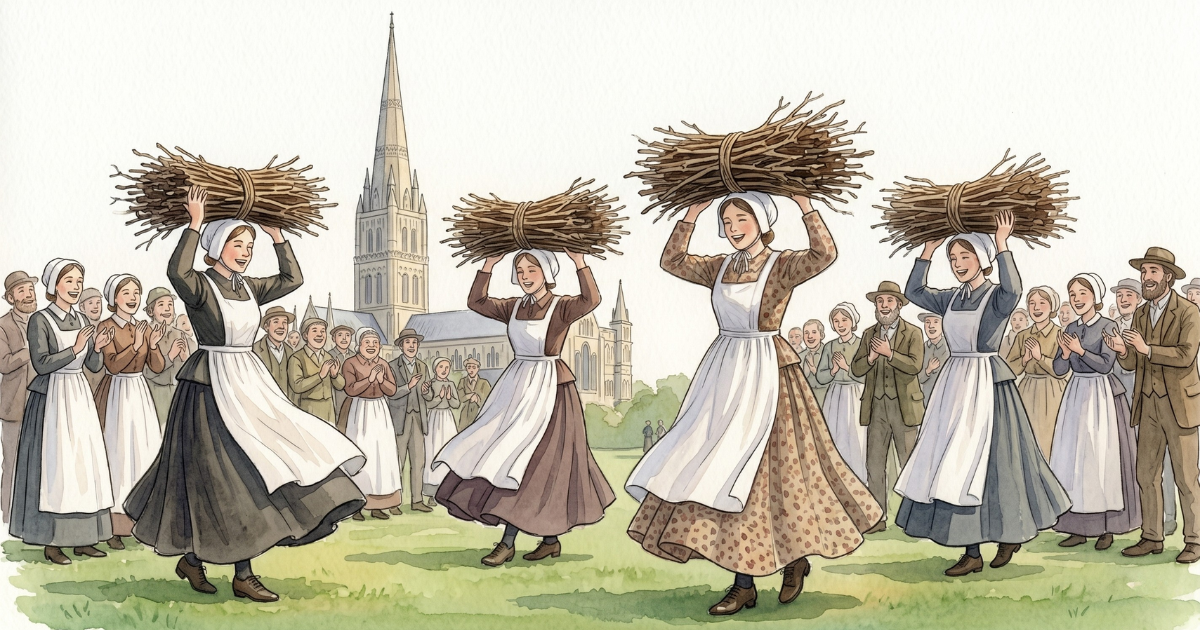
On the cathedral green, four women in nineteenth-century fieldworker dress – known as the Nitch Ladies – dance with nitches balanced on their heads. A nitch is a heavy bundle of hazel and oak twigs the size of a small sheaf, weighing several pounds. The dance is short, formal, and watched closely by the cathedral congregation.
The charter and the shout
The congregation enters the cathedral behind the Oak Apple Club's banner. On the steps of the High Altar, a cathedral canon reads from the 1603 charter. The villagers shout "Grovely! Grovely! Grovely! And all Grovely!" The shout is the legal claim, made publicly inside the cathedral, on the date the charter has always been read.
1603: the confirmed charter
The charter is dated March 1603 and was issued by a forest court held at Grovely. It records that the inhabitants of Great Wishford had been defending their forest rights since 1292 – three hundred years earlier – and that the 1603 confirmation was a clarification of rights already established. The specific rights listed are the right to gather firewood by the deadwood-load, the right to cut green boughs on Oak Apple Day, and the right to graze pigs in the wood. The charter is held in the Wiltshire and Swindon Archives.
1825: Grace Reed and the Earl of Pembroke
In 1825, after the Earl of Pembroke bought the manor and prohibited wood-gathering in Grovely Wood, a nineteen-year-old named Grace Reed walked into the wood with three other women from Barford St Martin, gathered firewood, and walked out. They were arrested, refused to pay their fines, and were committed to Fisherton Gaol in Salisbury. Local people raised the money for a lawyer; the 1603 charter was produced in court; the Earl's prohibition was overturned. Grace Reed lived to eighty-eight at Primrose Cottage in Barford. The case is the legal backbone the modern Oak Apple Club still leans on.
The Oak Apple Club, 1892 to today
The Oak Apple Club, which still organises the day, was founded in 1892. It maintains the charter records, coordinates the village's pre-dawn waking, liaises with Salisbury Cathedral on the service, and arranges the procession on the day. Membership is open to inhabitants of Great Wishford and Barford St Martin and their descendants. The Club has held the custom continuously since 1892, with no breaks even through the two World Wars.
Seeing it
The procession leaves Great Wishford at around 10 in the morning. The cathedral service is at midday. The Marriage Bough goes up on St Giles's tower on the day itself and stays up until the following Oak Apple Day. If you want to attend, the cathedral service is open and the Nitch Ladies' dance on the green is the most photographed moment of the day. Stand near the cathedral steps for the entry of the Oak Apple Club banner; it is the first sign of the procession arriving.
Sources: Charter of Grovely (March 1603), Wiltshire and Swindon Archives; Ronald Hutton, Stations of the Sun (1996); Oak Apple Club, Great Wishford (oakappleclub.co.uk); Salisbury Cathedral records.