Hawthorn Butter: The May Blossom in the Kitchen
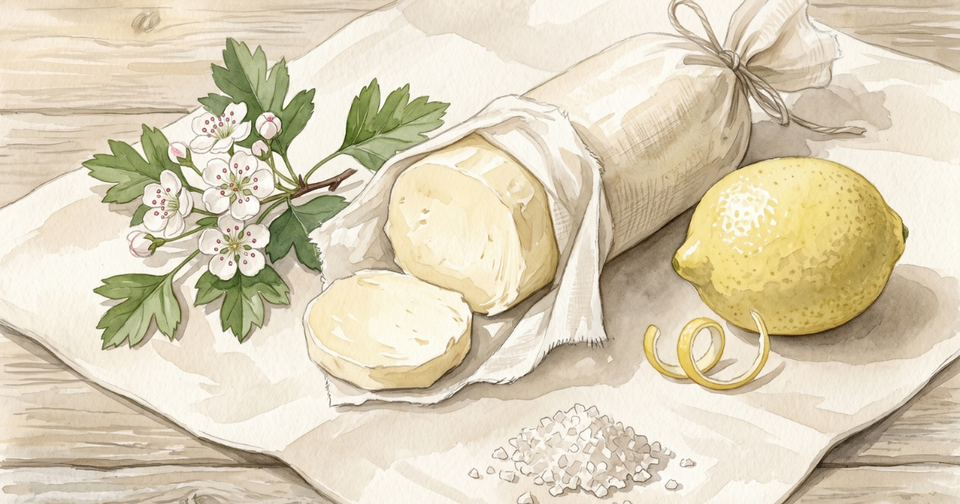
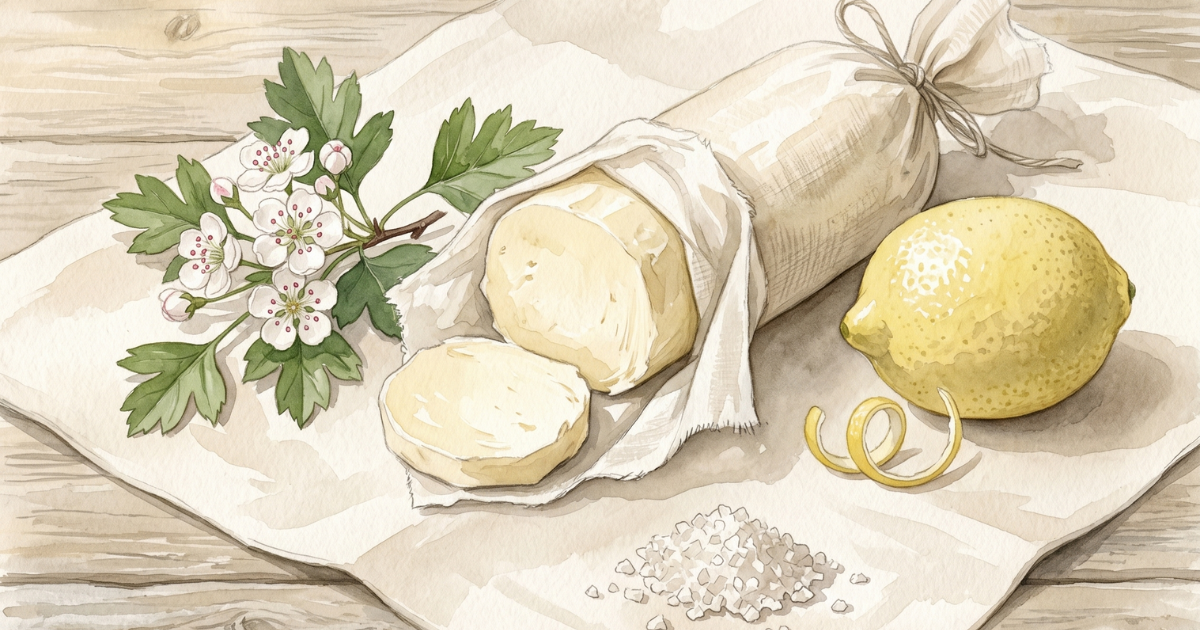
The old name for hawthorn blossom is May. Dorothy Hartley uses the word in Food in England without italics or explanation, the way you would refer to any common ingredient: "in May time, when the blossom is on, the may butter is made and the may syrup put up." May, as in the flower, was a kitchen ingredient for centuries before it was a Latinate species name. The recipe below is a quiet domestic survival of that lost vocabulary: hawthorn flowers folded into butter with lemon zest, eaten on warm toast or melted onto grilled fish.
"May" as the old name
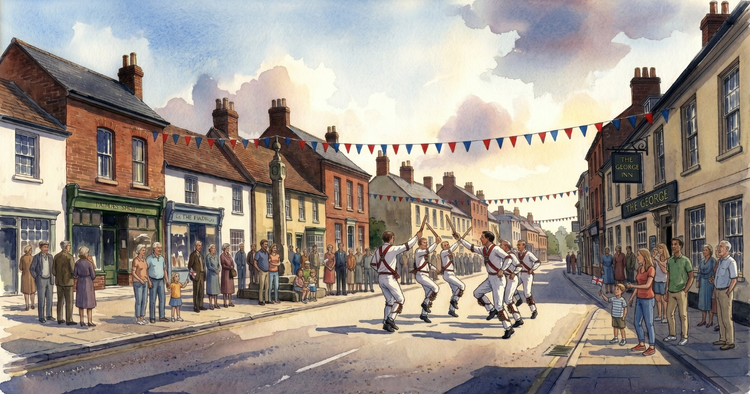
Hawthorn (Crataegus monogyna) was simply "may" in older English. The plant flowered in May, the flowers were called the may, and a child sent to gather the may came back with hawthorn blossom. The proverb "ne'er cast a clout till may be out" refers not to the calendar month but to the blossom: until the hedges are white, the cold weather is not done with you. The word survives in compound names – may-blossom, may-tree, the Mayday – but as a single noun it has dropped out of everyday English. Hartley uses it routinely; her readers in 1954 still knew exactly what she meant.
Bread and cheese
Country children called the new leaves of the hawthorn "bread and cheese" and ate them straight off the branch on the walk to school. The young leaves are mild, slightly nutty, faintly cucumber, and harmless in small quantities. The blossom was a step up: more fragrant, more delicate, picked in handfuls during the brief window of May. Hartley records a "bread and cheese" pudding made by farm workers in blossom season, with young hawthorn leaves and flower buds layered with thin strips of bacon inside a suet crust, steamed in a basin. It is the sort of recipe that survived in farmhouse kitchens long after it had vanished from the books.
The window
Hawthorn blossom is at its best for ten days from the moment the buds open. After that the petals start to brown at the edges and the scent shifts from honey-sweet to slightly muskier. The window for picking is narrow. Pick on a dry morning, away from busy roads, choosing branches that have just come into full white. The flowers do not keep: within a day or two they will have wilted on the plate. They need to go into the butter or the cordial the same day they come off the hedge.
Hawthorn butter
Ingredients: 250g unsalted butter, softened; two large handfuls of hawthorn blossom, picked from the hedge that morning; zest of one unwaxed lemon; a pinch of fine sea salt.
Method: Strip the flowers from the stalks; the stems are bitter and want discarding. Fold the flowers and the lemon zest into the softened butter with the salt, using the back of a spoon to press the flowers gently into the butter rather than chopping them. Spoon onto a sheet of greaseproof paper, roll into a log about three centimetres thick, twist the ends, and chill until firm. Slice discs onto grilled fish, lamb chops, new potatoes, or warm toast. The butter keeps a week in the fridge or three months in the freezer.
Hawthorn cordial
Cordial is the keeping version, the way to carry the smell of the lane into the summer. Cold-infuse a handful of fresh flowers in a sugar syrup of equal parts caster sugar and water with the zest and juice of a lemon overnight in the fridge. Strain through muslin and bottle. Used over ice or with sparkling water through July and August, it brings the smell of May hedges back at midsummer when the white is long gone. A small bottle goes a long way and the cordial keeps three months refrigerated, longer with a tablespoon of vodka added as a preservative.
Foraging safely
Pick from hedges away from busy roads and away from any boundary where spraying is likely. Pick only what you will use that day; the blossom does not keep. Pick selectively rather than stripping a branch, leaving plenty for the bees and for the haws that will form in autumn. Never use hawthorn from a garden centre or ornamental shrub: cultivated varieties may have been treated. A wild hedge in May produces an extraordinary quantity of blossom; a single morning's gathering for one cook will not be noticed.
Sources: Dorothy Hartley, Food in England (1954); Roger Phillips, Wild Food (1983); Plantlife species note: hawthorn.