The Nightingale in Britain: Migration, Decline, and the Sound of May
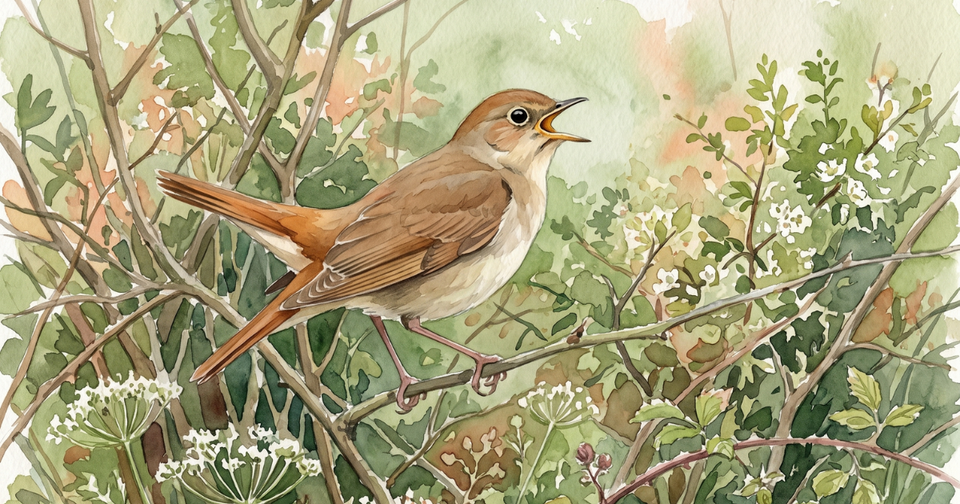
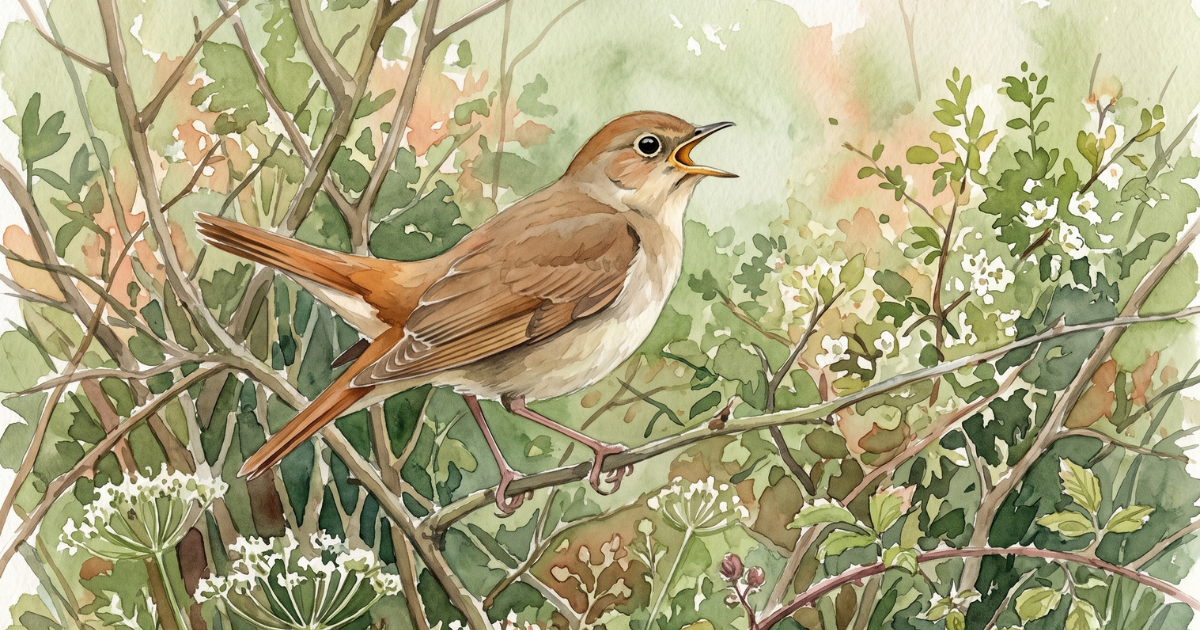
The nightingale arrives in southern England in mid April, having flown two thousand miles from the forests of West Africa, and sings through May and the first week of June before falling silent for the rest of the year. It is one of the longest migrations of any British songbird and one of the most precise: the same individual males return to the same scrub patches year after year, sometimes the same individual bushes. The British population has fallen by ninety per cent since 1970, but the surviving birds are concentrated in a few well-managed places where the song can still be heard at full strength.
The migration
The nightingale crosses the Mediterranean in March, the French farmland through early April, and arrives across the south coast of England between mid and late April. The birds wintering in West Africa, from Senegal east to the Gambia and beyond, navigate their return by stars and by the earth's magnetic field, and arrive at the same scrub patches they left the previous September. The migration takes about four weeks each way and includes a long passage over the Sahara. Male birds arrive first and begin singing immediately to claim territory; the females arrive a week or two later, when the song is in full flow.
The decline since 1970
The British breeding population of the nightingale has fallen by roughly ninety per cent since 1970. The RSPB now estimates around 6,700 singing males in the UK, all of them in southern and eastern England. The principal cause is the loss of low-growing scrub habitat to deer browsing, agricultural intensification, and the conversion of coppice woodland to forestry plantation. Deer in particular have grown to levels that prevent regeneration of the dense understorey the nightingale needs. The species is on the UK red list of conservation concern.
Where the birds still sing
The surviving population sits in a wedge running south and east from the Severn estuary, with strongholds in Kent, Sussex, Essex, and the East Anglian breckland. The largest single concentration is at Northward Hill in Kent, where former arable land has been allowed to revert to dense thorn scrub and where the RSPB recorded 47 singing males in 2026. Canvey Wick in Essex, a former oil refinery site now managed as a brownfield reserve, holds a smaller but stable population. North or west of the Severn the bird is now essentially absent.
The 2026 count
The RSPB's 2026 nightingale survey across its reserves recorded 176 singing males, the second-highest count in over a decade and a rise of 8.9% on the ten-year average. Alan Johnson, the RSPB England Area Manager, credited the recovery to careful coppicing and the cultivation of low-growing scrub. The pattern is local but real: where the habitat is managed for the nightingale, the population responds. The count was published at the end of April 2026 and offers the first significant positive year-on-year movement in decades.
Habitat: dense scrub and coppice
The nightingale needs dense, low cover at ground level, with the lowest branches between zero and two metres from the ground. The classic management technique is coppicing: cutting deciduous wood (hazel, hornbeam, oak) on a seven to twelve year rotation, which produces a thick low growth in years three to seven. Thorny scrub (blackthorn, hawthorn) also works well. The bird needs the cover not only to nest in but to sing from: nightingales sing from concealed perches low in the bush, not from the canopy, and an exposed singing perch is a sign of a thin habitat.
Listening
Nightingales sing best on still, warm nights between dusk and three in the morning, in May and the first week of June. They do not sing every night, and they go quiet once the female arrives and incubation begins. The song is loud, clear, and unmistakable once you have heard it: a series of slow whistles building into rapid trills and crescendos, with phrases repeated several times. If you live within their range, this is the fortnight. By mid-June the bulk of the song is over for another year.
Sources: RSPB Nightingale species page; BTO Nightingale paper (Wilson, Henderson & Fuller, 2002); Holt, Hewson & Fuller, "The Nightingale in Britain: status, ecology and conservation needs," British Birds 105 (2012).