The Witches of Canewdon
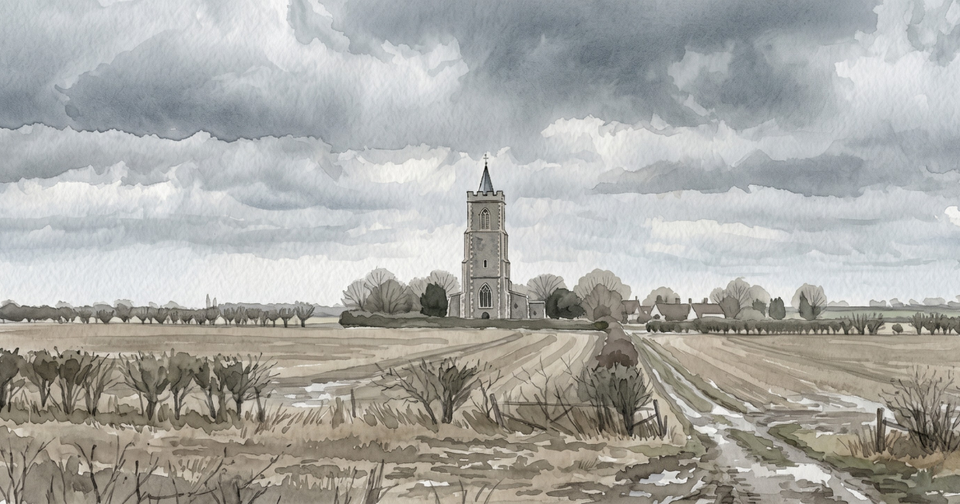
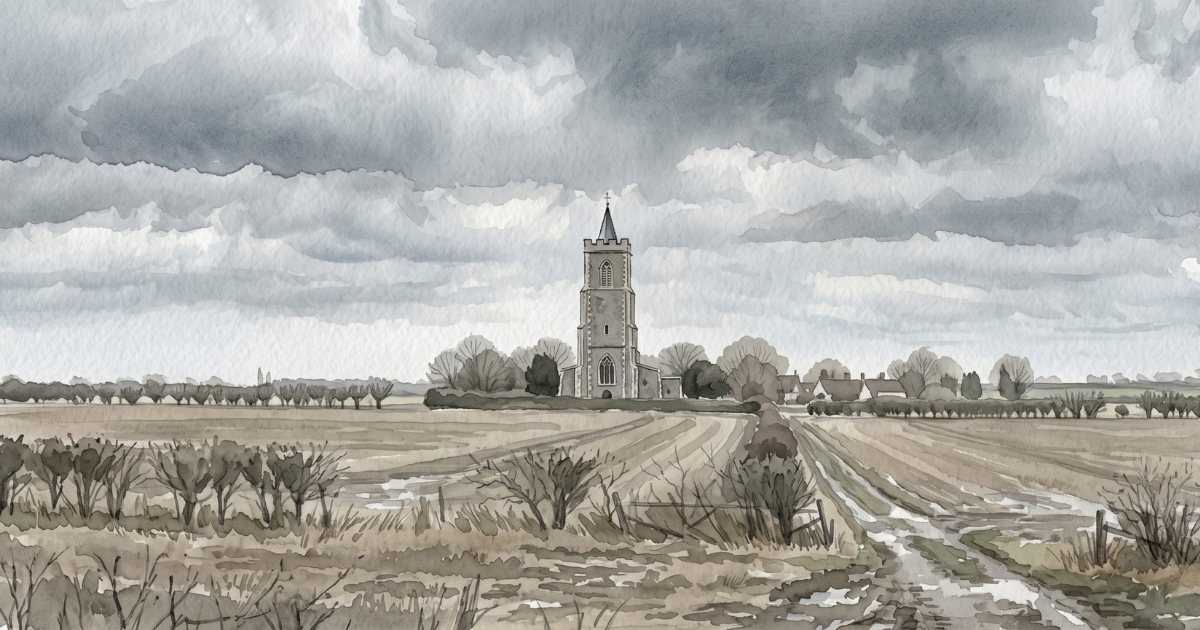
Canewdon sits on a low ridge above the Crouch estuary in south Essex, and the church of St Nicholas is the first thing you see for miles. The tower is fifteenth-century Perpendicular, finished in 1450, and it stands far higher than a village this size has any business carrying. The reason for the tower’s prominence is also the reason for the rest of this story.
The belief, as it is most commonly recorded, runs like this. As long as the tower of St Nicholas stands, there will always be six witches in Canewdon: three from the gentry and three from the working people, three of silk and three of cotton. When one dies, another is made. The number does not vary. The condition is the tower.
It was already old when the Essex antiquarians first wrote it down in the nineteenth century, and the precision of it – three and three, silk and cotton, the building condition – reads less like folk tale and more like a local ordinance. Eric Maple, who collected oral testimony in the village for his 1960 paper in Folklore, found that older residents could still name living women suspected of fitting the count. Maple’s informants were specific. They were not performing for a researcher.
The most famous figure to come out of this tradition was George Pickingill, born in Canewdon in 1816 and buried there in 1909. By trade he was a farm labourer. By reputation he was a cunning man, the East Anglian term for a folk practitioner who handled charms, cures, and the recovery of stolen property for a fee. Folks who worked alongside him for years insisted he could stop a reaping machine in the field by raising one hand and whistling, and that the machine would not start again until the farmer had paid him what he considered a fair wage. The story varies very little across sources. Pickingill’s grave is in St Nicholas’s churchyard; the stone is still legible if you know where to look.
The Canewdon belief has outlived the gentry it claimed three of, the cotton industry it claimed three from, and almost everyone who ever spoke of it as fact rather than folklore. The tower has not fallen. The current count, of course, is not available.
The Canewdon story originally appeared as the Curious Instance in Issue 3 of The Cottage Almanac, The First Swallow, published 16 April 2026.
If you want to visit
Canewdon is a forty-minute drive from Southend-on-Sea, or an hour and a half from London Liverpool Street by train to Rochford and bus from there. The village sits in flat country between the Crouch and the Roach, and the approach by road brings the tower into view long before the houses do. St Nicholas is open on most days; the churchyard is always accessible. Walk the south side of the church to find Pickingill’s grave – the inscription is plain, the surname unmistakable.
The Essex Record Office in Chelmsford holds the parish records for Canewdon under reference D/P 219, including the burial register that carries Pickingill’s entry.
Sources
Eric Maple, “The Witches of Canewdon” (Folklore, vol. 71, 1960). Essex Record Office, parish records D/P 219. St Nicholas Church, Canewdon: history and visiting information.