The Screaming Skull of Bettiscombe
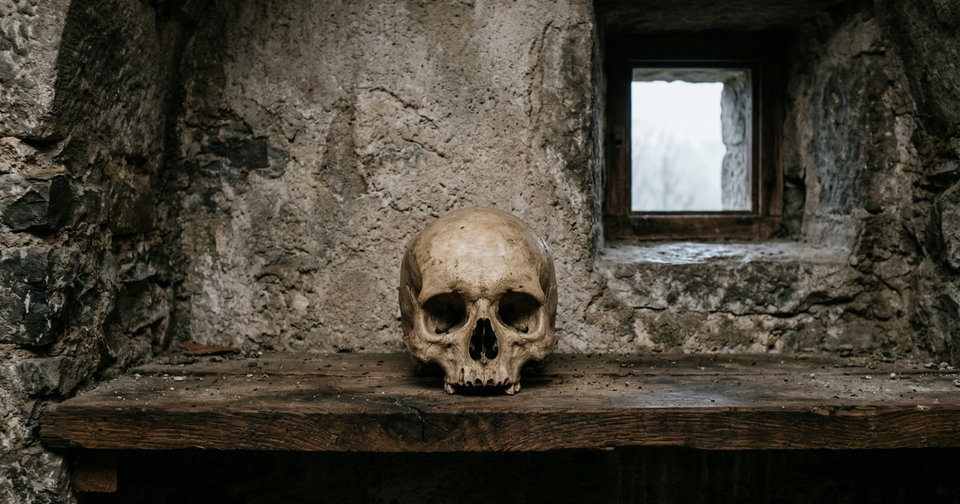
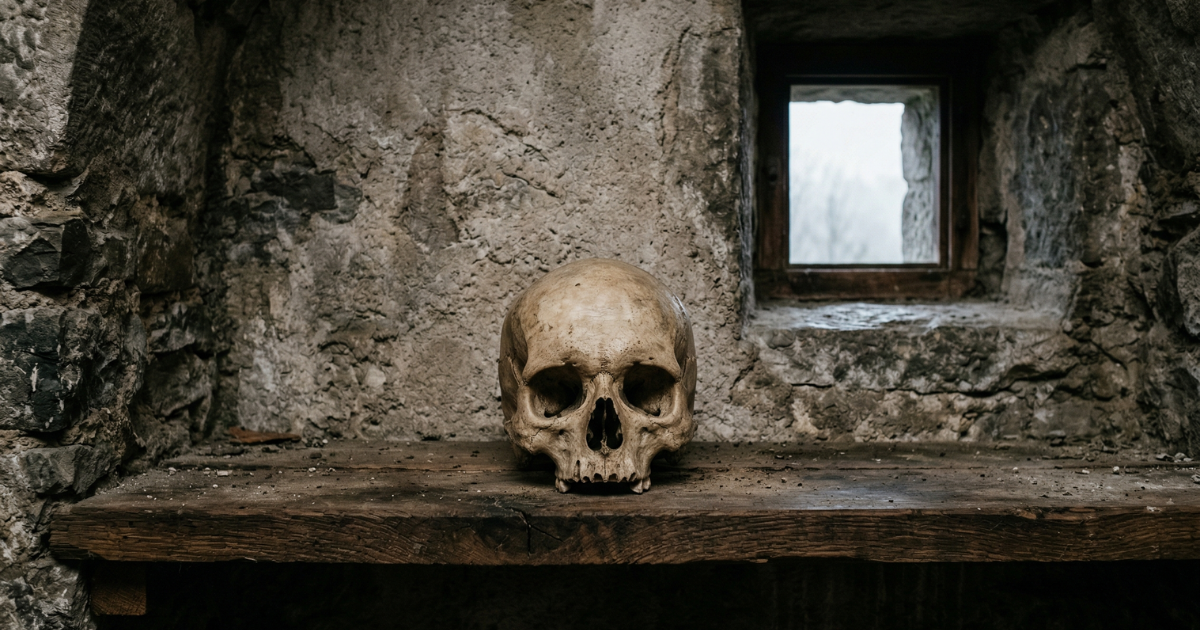
Bettiscombe Manor is a plain stone farmhouse in a fold of the Dorset hills above Bridport, in the village of Bettiscombe in Marshwood Vale. On a shelf inside the manor sits a human skull. It has been there, on a shelf or in a chimney piece, for at least two hundred years. Removing it from the house, the story goes, brings on a noise like screaming from somewhere on the property, which stops only when the skull is returned.
The most widely repeated version of the legend, recorded by the Dorset antiquarian John Symonds Udal in the early 1900s, runs as follows. The skull belonged to a Black servant of the Pinney family, brought to England from the West Indies in the eighteenth century. As he lay dying he asked to have his body returned to his homeland for burial. His request was ignored. The screaming started soon afterwards from the direction of the parish churchyard, and stopped only when the body was brought back to the manor. Over time the flesh went, and the skull was all that remained.
When Udal investigated further, he found two things. The first was that an older villager remembered the legend in a simpler form: a faithful servant, a memento on a shelf, no screaming at all. The screaming had been added later, in the Victorian period, and the supernatural element grew with each retelling. The second was that the Pinney estate records in Nevis listed an enslaved man whose recorded name was Bettiscombe, and who died of a fractured skull. The story had a real person behind it, and a real act of violence.
In 1963 the skull was taken to the Royal College of Surgeons in London. Professor Gilbert Causey examined it and concluded that it was female, in her early twenties at death, and approximately two thousand years old. Iron Age. Probably Durotrigian – the people who built the great hillforts of Dorset before the Romans came. The skull on the shelf at Bettiscombe is not the skull of a man called Bettiscombe. It is the skull of a young woman who died around the time Christ was born, found in or near a Dorset field, and somewhere in the eighteenth century named after the man whose story it now carries. The name it goes by is not its own.
There are a handful of objects in England whose history has been straightforwardly inverted by the people who kept them. This is one of them.
Bettiscombe was the Curious Instance in Issue 4 of The Cottage Almanac, The Cuckoo’s Arrival, published 23 April 2026.
If you want to see the country it came from
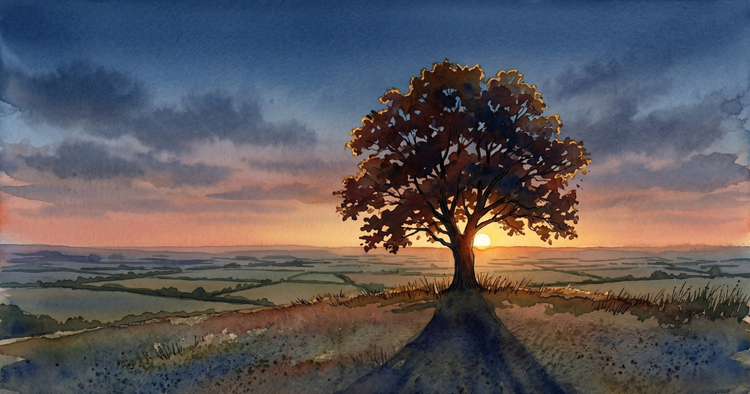
Bettiscombe Manor is private and not open to visitors, but the village sits in Marshwood Vale, an hour west of Dorchester and twenty minutes inland from the Dorset coast at Charmouth. The hillforts the Durotriges built are all walkable from Bettiscombe in a day. Pilsdon Pen is the highest point in Dorset at 277 metres, ringed with Iron Age ramparts and reached on foot from the lay-by below. Lewesdon Hill is a mile to the south-east, slightly lower but more wooded. Eggardon is further east, with the largest enclosure of the three. Stand on Pilsdon Pen on a clear evening with the sea visible to the south and the country the skull came from is laid out below you. The skull is somewhere in there.
The Pinney Papers, including the Nevis estate records, are held at the University of Bristol Special Collections under reference DM 58 and may be consulted by appointment.
Sources
J. S. Udal, Proceedings of the Dorset Natural History and Antiquarian Field Club, vol. 31 (1910). Pinney Papers, University of Bristol Special Collections, DM 58. Causey examination report, Royal College of Surgeons of England, 1963. Hillfort information at English Heritage.