The Appleby Horse Fair: The Gathering That Runs on No Charter
For one week in early June, the small Cumbrian town of Appleby-in-Westmorland fills entirely with horses. Driven traps and painted wagons come down the lanes, the horses are washed in the River Eden and run up the tarmac for buyers, and a town of about three thousand people takes in something like ten thousand Gypsies and Travellers and thirty thousand visitors besides. It is billed as the largest gathering of its kind in Europe, and it happens on a hillside outside the borough every June. What it does not have, and has never had, is a charter. The right to be there rests on something older and stranger than parchment.
What happens on the hill
The fair runs from the first Thursday in June to the following Wednesday, though the main days are the weekend. The horses are led down into the Eden, scrubbed, and brought back up the bank wet and shining to be shown. The showing is done on a stretch of road called the flashing lane, where a man will gallop a horse hard up the tarmac and back to put its paces on display. There is trading and a market, music and dancing, and the hand-painted Romani vardos and Irish Traveller wagons drawn up in rows. The ground is Fair Hill, on the edge of the town, thirty-odd acres of open land that fills for the week and empties again by the Thursday after.
Prescriptive right, not parchment
Most old English fairs trace back to a grant: a king gave a borough the right to hold a fair on a saint's day, taxable and owned. Appleby has nothing of the kind. It rests instead on prescriptive right, a principle in English law by which a thing done openly and without a break for long enough becomes a right in itself. No one owns the fair. No one has ever been charged to come. The original ground, Gallows Hill, was unenclosed land outside the borough boundary, which is to say it belonged to nobody in particular, which is to say it was exactly the kind of place a fair like this could not be moved off.
How old, and how the shape was set
The fair has been held every June since 1775. Confusingly, it was set up to compete with an older chartered fair in the town, and was named the New Fair to mark the distinction; the chartered one closed, the borough grew, and the New Fair kept its name and its hill. The horses and the families who deal in them gave the fair its present form only towards the end of the nineteenth century. Before that it was a stock and goods fair like many others. The thing it is famous for now, the great Gypsy and Traveller gathering, is the youngest layer on top of the oldest right.
Washing the horses in the Eden
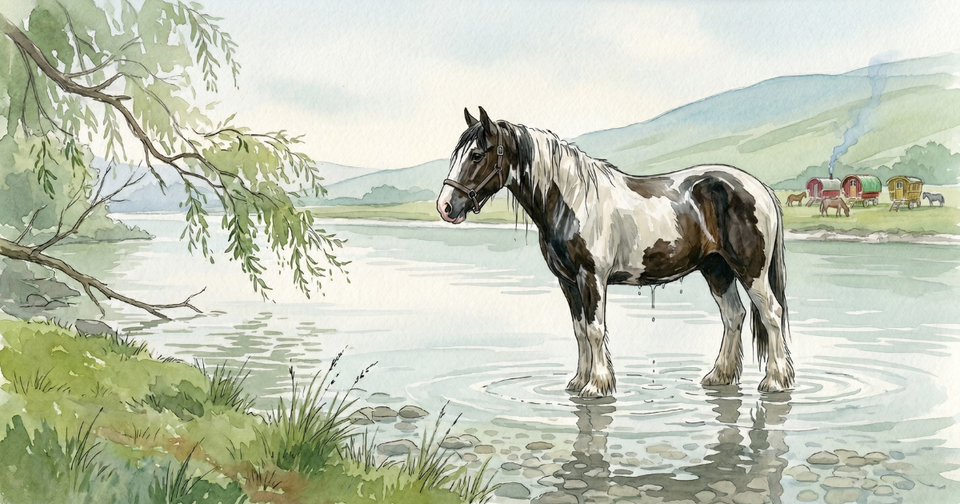
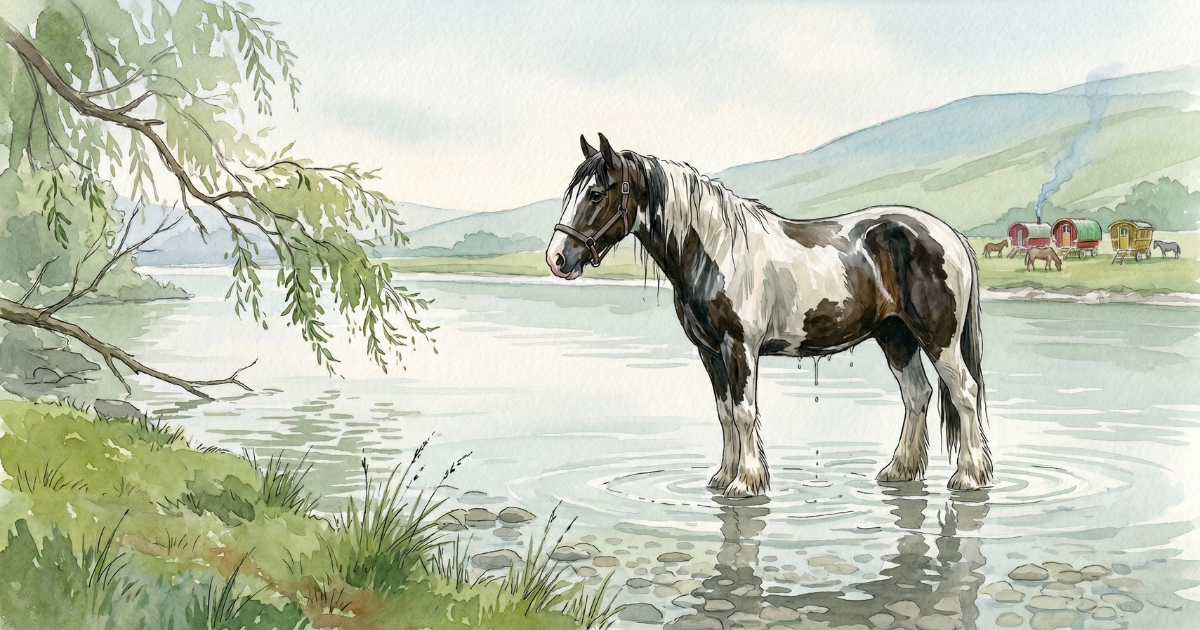
The washing is the image most people carry away. The horses are taken into the river above the bridge, held in the current, and worked over until the coats lift and shine. People sit on the bank for hours to watch it. The practical purpose is to show a clean animal to a buyer, but the sight of a piebald cob standing chest-deep in a Cumbrian river with the fells behind it is the one that ends up on the postcards. After the wash comes the flashing lane, and after the lane, if the deal is struck, the spit-and-shake handclasp that still seals a horse trade here.
Seeing it, and the contrast with a chartered fair
There is no ticket and no gate; the fair happens on open land and the town opens itself for the week. First-time visitors are warned that fast and tethered horses move through the streets throughout, and that the riverbank fills early on the main days. It is worth holding the whole thing next to a fair that does have its parchment. Baldock's own October charter fair was granted by King John in 1199 and sets up on the strength of that grant; Appleby has no document anywhere that grants it the right to be there, and a hillside full of horses every June regardless.
Sources: Appleby Town Council, Fair Hill and Horse Fair; Appleby Horse Fair (MASCG official site); David Kenyon, Appleby Fair: A Living Tradition (2017).