Duffers' Fortnight: The Mayfly Rise on the Chalk Streams
For a fortnight in late May and early June, the chalk streams of southern England do something that anglers have a slightly rueful name for. The big mayfly comes off the water in such numbers that the trout drop all caution and rise to anything, and even a complete beginner can catch one. They call it duffers' fortnight, after the duffer who could not miss. You do not need a rod to be there for it. The rise at dusk, when the spent flies fall to the surface and the whole pool starts to work at once, is one of the few wildlife spectacles you can set your watch by.
What duffers' fortnight is
The fortnight is the brief window, usually late May to mid-June, when the largest of the British mayflies, Ephemera danica, emerges from the chalk streams in bulk. For most of the year the trout of a clear chalk stream are wary, picky feeders. During the hatch they gorge, and they do it near the surface in plain view, which is why the period is proverbial among fly-fishermen as the easy fortnight. The name is affectionate and a little self-mocking; the serious angler half-disapproves of how simple it makes things. For the watcher on the bank, the same abundance that undoes the trout is what makes the rise worth seeing.
The life of the fly
The mayfly spends most of its life as a nymph in the gravel of the stream bed, a year or more underwater before it rises to hatch. It comes off the surface as a dull-winged subadult, the dun, then moults a second time, which no other insect does, into the bright clear-winged adult, the spinner. The adult has no working mouthparts and cannot feed. It has a day or two to mate and lay, and then it dies. The whole airborne life of the most conspicuous fly on the river is measured in hours. Everything you see above the water at dusk is happening against that very short clock.
Reading the rise at dusk
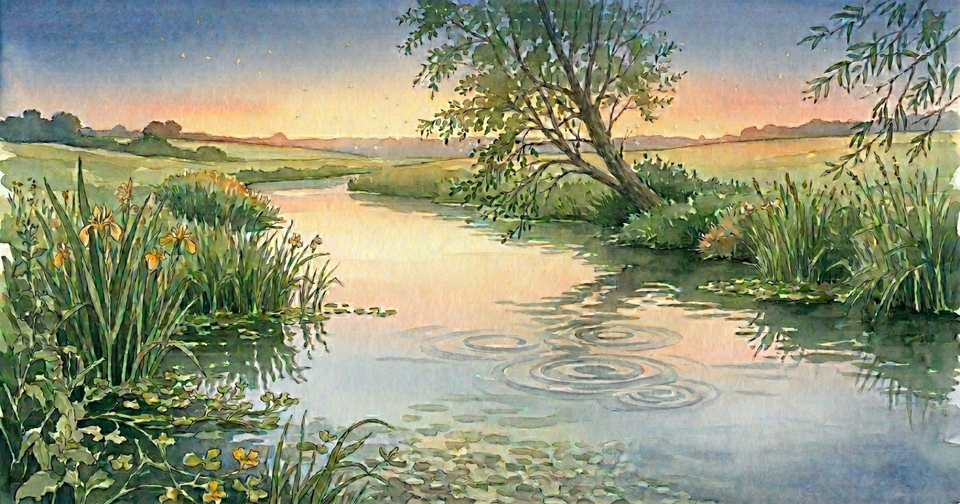
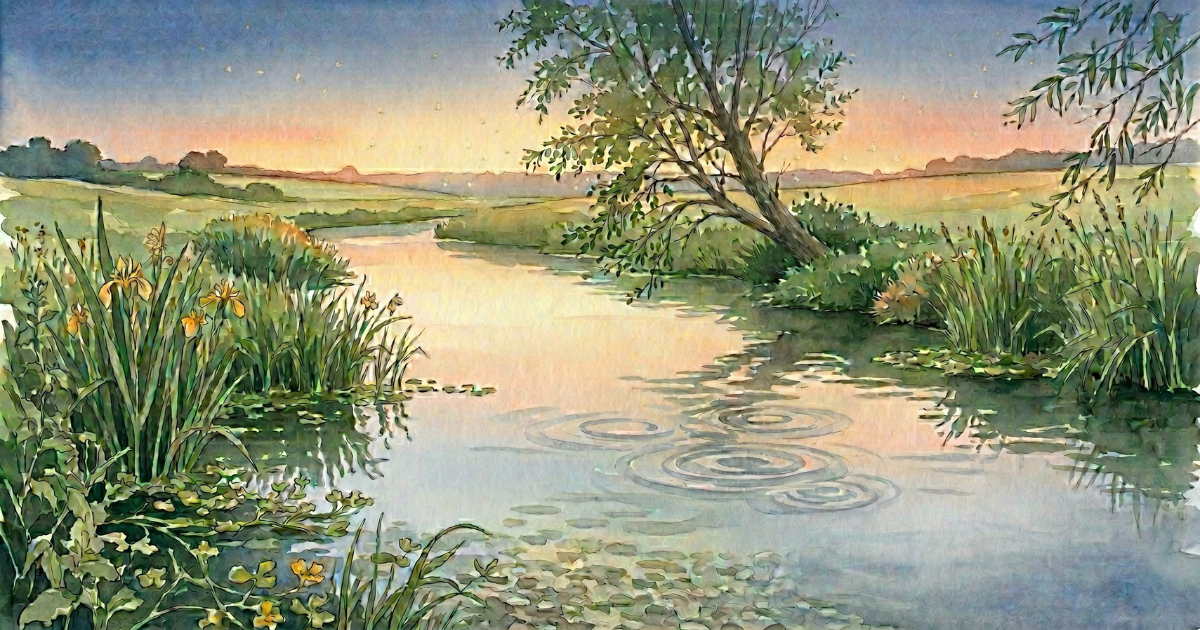
By dusk the day's hatched flies have moulted into their final adult form and gathered into swarms above the water, rising and falling on the air in a slow vertical dance. The females come down to the surface to lay, and then, their one or two days of adult life spent, they fall flat onto the water with their wings out. That is the moment to wait for. As the light goes, the spent flies settle on the surface and the trout begin to rise to them: a soft dimple, a ring spreading on the water, then another, then the whole pool working at once.
Where to stand
You want a chalk stream, clear and low, and a bridge or a bank where you can see the surface. In Hertfordshire the Mimram and the Beane are the local examples, both running low and clear by early June, both shrinking back from their winter banks. Go at dusk on a still evening; wind flattens the swarm and spoils the rise. Watch the air above the stream first for the dancing swarm, then the water below it, and wait for the first ring. The same chalk-stream geology that makes the rivers run clear is described more fully in the guide to England's chalk streams, which sets out why these rivers behave as they do.
Why the chalk stream is the place
Mayfly hatch on many waters, but the chalk stream is where duffers' fortnight became proverbial, and the reason is the water itself. A chalk stream is fed by springs rising through the chalk, so it runs clear, cool, and steady in temperature and flow, with a gravel bed the mayfly nymph needs and a richness that supports them in numbers. England holds the large majority of the world's chalk streams, almost all of them in the south and east, which makes the early-summer rise on a clear Hampshire or Hertfordshire river something close to a national specialism. Get to one at dusk this week and the trout will tell you when it has started.
Sources: Dame Juliana Berners, A Treatyse of Fysshynge wyth an Angle (1496); Frederic Halford, Dry-Fly Fishing in Theory and Practice (1889); Wild Trout Trust, chalk stream guidance.