The Elder: The Hedge Tree You Ask Before You Cut
Almost overnight in early June, the hedges turn from green to white, and the elder is the reason. Every year it still seems sudden. Walk past a hedge in the warm middle of the afternoon and the scent reaches you a few feet before the flower does, high and musky and faintly of cat, which is the honest description nobody prints on the cordial bottle. The elder is the most useful tree in the English hedge and the most uneasy. It gave the household flowers, berries, and medicine, and it was the one tree you did not cut without asking first.
Knowing the tree
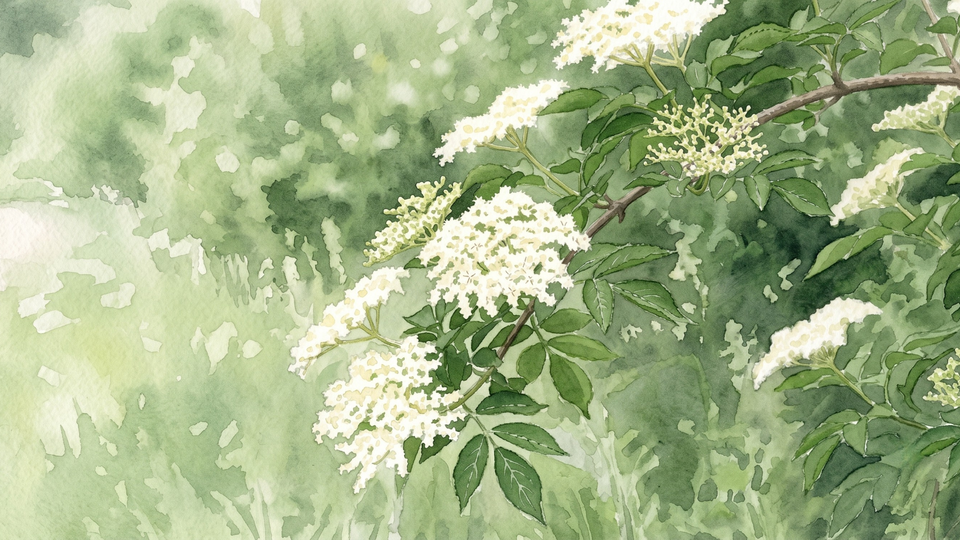
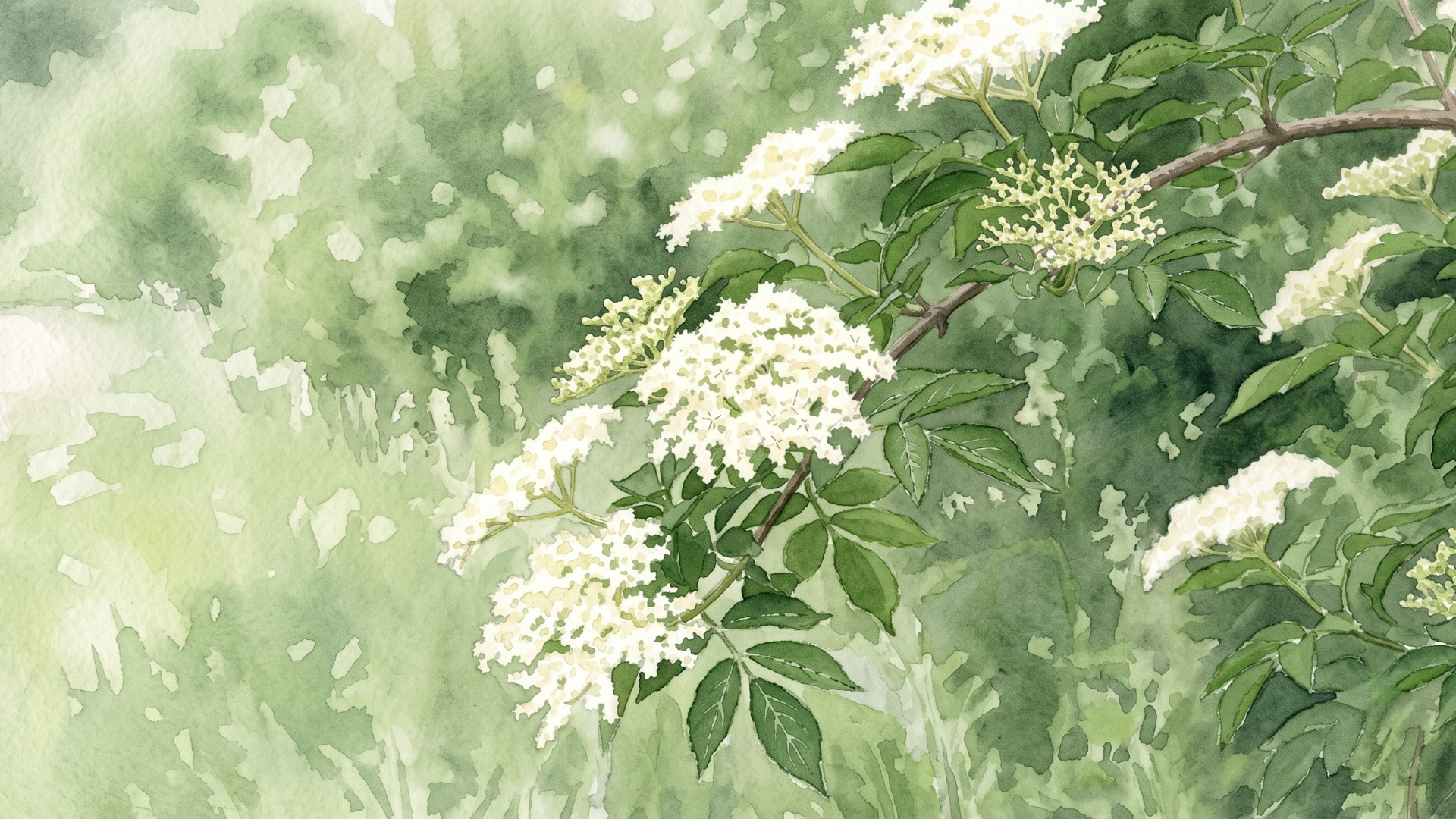
The elder (Sambucus nigra) is a small, fast-growing tree of hedges, waste ground, and the edges of woods, rarely tall, often more shrub than tree. The leaves are pinnate, in opposite pairs of five to seven leaflets, with a rank smell when crushed. The flower is the June feature: flat creamy plates, called corymbs, ten or fifteen centimetres across, made up of hundreds of tiny five-petalled flowers. By September those flowers have become hanging bunches of small purple-black berries. The wood is soft with a wide pith, easily hollowed, which is the source of half its folklore and its old use for whistles and pop-guns.
The tree you asked before cutting
Across northern England and Scotland the elder went by the name bourtree, and the name carried all the tree's uneasy standing with it. The bourtree was the one you did not cut, did not burn, and did not bring indoors. You asked its leave before you took any of its wood. The formula recorded in Ella Mary Leather's folklore of Herefordshire ran: Old girl, give me some of thy wood, and when I grow into a tree, thou shalt have some of mine. You asked, and only then cut. To take it without asking was to invite illness, an accident, or a death in the house within the year.
Hannah Glasse and the counterfeit wine
The flowers were not only swept up in superstition; they were worked hard in the kitchen. Hannah Glasse, in The Art of Cookery Made Plain and Easy of 1747, used elderflowers to counterfeit a fashionable import. Her Elder-flower Wine steeps the blossom in a boiled syrup of sugar and water, with lemons and yeast worked in, and she promises it will pass for Frontiniac, a sweet muscat from the south of France that an English cook could not easily get hold of and apparently saw no reason to pay for when the hedge would do. The English still-room had a long habit of making the costly thing out of the free one, and the elder was its readiest material.
Picking the flowers
The window is short. The elder is at its peak for the first week or two of flowering and will hold for perhaps ten days before the flowers begin to brown and the scent turns from that high sweetness to something stale. Pick on a dry, sunny afternoon when the scent is strongest and the tiny flowers are fully open. Shake each head gently before it goes in the basket, on the principle that whatever lives in the flower is welcome to stay in the hedge. Do not wash the heads; washing flattens the flowers and rinses away the scent that is the whole point of picking them.
Fritters and cordial
Two preparations catch the flower at its best. For fritters, hold a head by its stalk, dip it in a thin batter of plain flour and cold sparkling water so the flowers show through, and fry it flower-side down in hot oil for a few seconds until the lace of it goes gold. Snip off the stalk, dust with icing sugar, squeeze over lemon, and eat at once; the fritters soften within minutes, which is why this is a stove-side thing and not a plated pudding. For cordial, steep twenty-odd heads with sliced lemons, sugar, and a spoonful of citric acid in hot syrup for a day, then strain and bottle. Diluted in January, it tastes exactly of June.
Sources: Hannah Glasse, The Art of Cookery Made Plain and Easy (1747); Ella Mary Leather, The Folk-Lore of Herefordshire (1912); Geoffrey Grigson, The Englishman's Flora (1958).