English Sheep Milk Cheese: The Upland Summer Farms and the Modern Survivors
Sheep milk cheese was the standard product of the upland summer farms across Britain, made fresh and eaten within days. The Welsh hafod and the Scottish shielings ran on it through the peak of the spring grass. Dorothy Hartley records the practice in Food in England (1954); the cheeses were hand-turned in wooden vats, often crumbly, and lasted a fortnight at most. The tradition almost vanished in the twentieth century. It survives now in two main forms: a fresh white cheese in the Slipcote tradition, and a harder aged version in the Berkswell tradition.
The upland summer farm
Before refrigeration and motor transport, sheep cheese was a way of converting the spring grass into a storable food while the milk was still flowing. Sheep are seasonal milkers – they lamb in early spring and the milk runs strongly for about four months – and the cheese was made daily during the flush. The hill farms ran in two parts: a permanent dwelling in the valley used through winter, and a summer dwelling on the high pasture used from May to August.
The Welsh hafod
The hafod (plural hafodydd) was the Welsh upland summer farm. The family moved up in May with the flock; the cheeses were made in the hafod buildings, single-room stone shelters with a hearth and a milking shed; the family came down in August or September with the season's cheeses. The system was widespread in upland Wales until the late nineteenth century, when the railways made daily milk transport cheap and the upland production was undercut by lowland dairies.
The Scottish shielings
The Scottish equivalent was the shieling (Gaelic àirigh), the same arrangement under a different name. Shielings remained in active use in the Highlands and Hebrides into the early twentieth century, with the last regular shieling-summer recorded in Lewis in the 1920s. The cheeses were eaten fresh and traded in autumn for goods the farm did not produce – salt, iron, woven cloth.
Dorothy Hartley, 1954
Hartley's Food in England (1954) records the upland summer farm as already a memory in most of England by the mid-twentieth century. Her description of the sheep cheese – hand-turned in wooden vats, often crumbly, eaten fresh within days – comes from older informants whose own memory ran back to working farms of the late nineteenth century. Hartley was working from oral history as much as from her own observation. The book is the best single record of the tradition in print.
Why sheep milk
Sheep milk is richer in fat – about 7 per cent, against 4 per cent in cow milk – and higher in protein. It curdles more easily, drains more cleanly, and produces a smaller cheese for the same volume of milk. Sheep milk also handles travel better than goat milk and stores longer than cow milk, which made it the preferred upland summer product before refrigeration. The lambs are weaned at six to eight weeks; after that the milk is the farm's, until the autumn dry-off.
The fresh cheese
Fresh sheep cheese is what most of the upland farms produced. The milk was warmed, rennet added, the curd allowed to set, then cut and turned by hand into wooden moulds. Drained overnight, salted, eaten within a week. The texture was crumbly, the flavour mild and slightly sweet, and the cheese did not keep beyond a fortnight. The freshness was the point: the cheese tasted of the grass the sheep had been eating that morning.
The brined version
For longer keeping, the curds were heavily salted and packed into a strong brine. Brined sheep cheese keeps for months and sharpens as it ages. The salting also makes the cheese travel better, which is how it reached the market towns and the autumn fairs. The technique survives in the Slipcote tradition and in some of the smaller modern dairies.
Sussex Slipcote
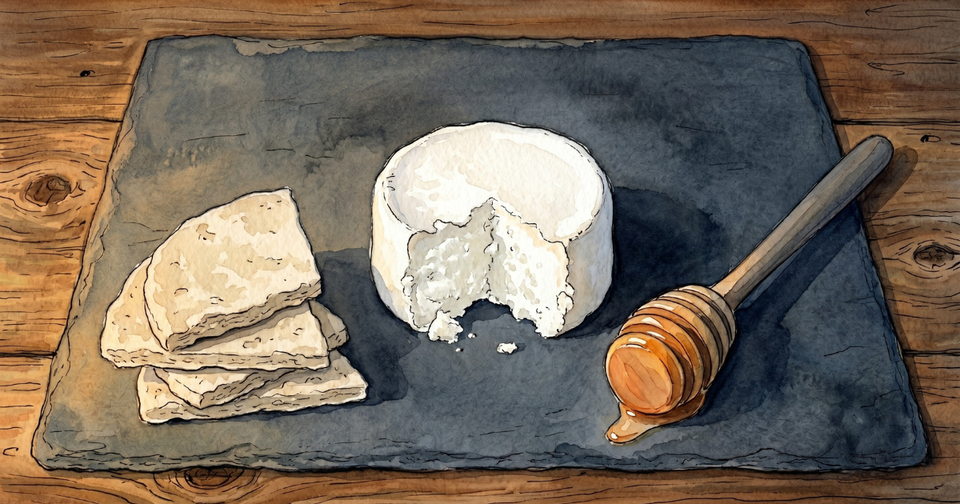
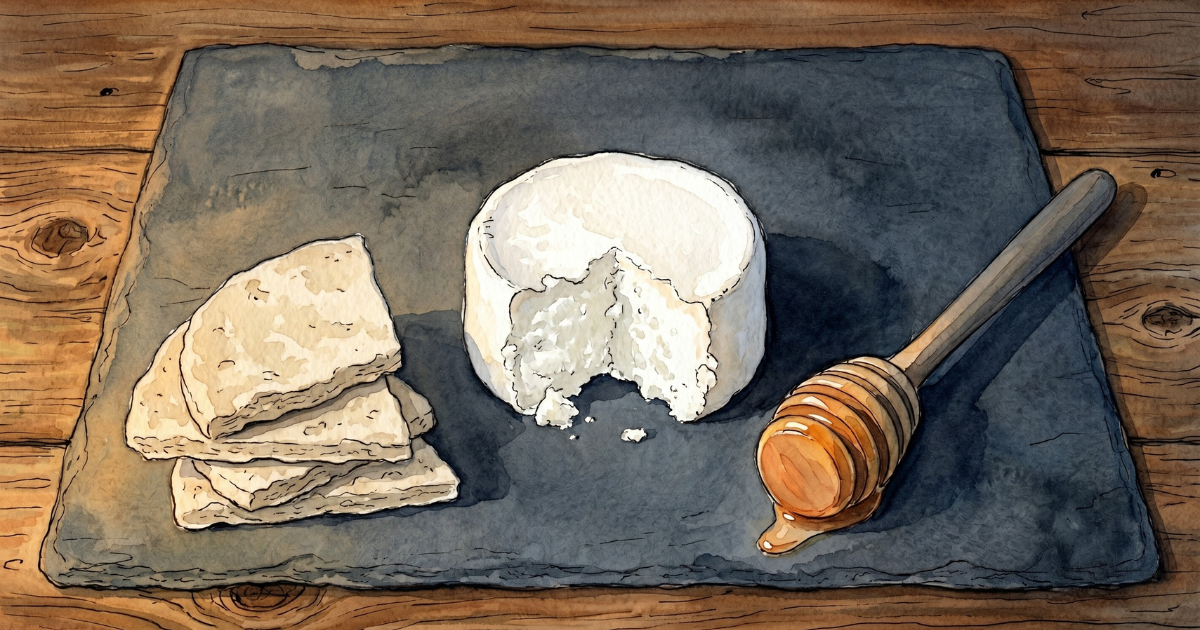
The High Weald Dairy in East Sussex makes Sussex Slipcote, a fresh brined sheep cheese in the tradition of the upland summer farms. The name comes from the older English practice of slipping the cheese out of its mould while still soft – slipcote, from "slipped coat." The cheese is small, round, and white, with a fresh slightly tangy taste. Best eaten within a week of buying, crumbled over salad or spread on warm oatcakes with honey.
Berkswell
Berkswell is the harder-aged version from the West Midlands, made at Ram Hall Dairy in Warwickshire from Manchega-ewe milk. The cheese ages for four to six months on the basket moulds that give it its characteristic ribbed surface. It is one of the most decorated British cheeses of the modern era and shows what a properly-made aged sheep cheese can be: dense, slightly sweet, with the deep grass-and-nut taste that develops over a long ripening.
Buying English sheep cheese today
The English sheep-cheese world is small but growing. The High Weald Dairy makes Sussex Slipcote, halloumi, and several others; Ram Hall Dairy makes Berkswell; Shepherds Purse makes Yorkshire Pecorino; Wigmore Dairy makes Wigmore, the soft-rind ewe cheese. Most can be bought direct from the dairy or through specialist cheese shops; all four dairies sell mail-order. The cheese keeps well, and a Berkswell or a Wigmore in the fridge is a useful summer-evening anchor for the kind of supper that does not need cooking.
Sources: Dorothy Hartley, Food in England (1954); High Weald Dairy (highwealddairy.co.uk); Ram Hall Dairy / Berkswell (berkswellcheese.com); Shepherds Purse (shepherdspurse.co.uk); Wigmore Dairy.